

Two hours and thirty-seven minutes is a long time to spend in a desert, and Gurmmeet Singh’s camera knows it. Somewhere in the Rajasthan stretch of Mirzapur: The Movie, the interquel nobody structurally needed but Excel Entertainment greenlit anyway, there’s a wide shot of a convoy crawling across sand, dust plumes curling behind jeeps, and the film briefly forgets it’s a film. It looks like a Western. Then a character opens his mouth, a familiar profanity gets bleeped at the mixing stage, and the illusion collapses back into the same Purvanchal throne-room routine we’ve watched for three seasons and change. That oscillation, big-screen ambition versus small-screen habit, is the entire story of this movie.
An Interquel Built on a Loophole
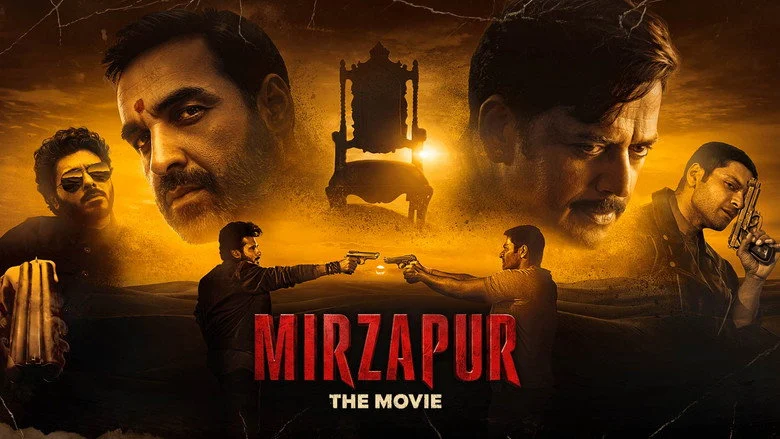
Let’s be precise about what this is, because the marketing hasn’t been. Mirzapur: The Movie is not a sequel. It’s a 197-minute interquel wedged into the 2018 timeline of Season 1, which is a polite way of saying it resurrects characters the series already killed because the fandom missed them. Divyenndu’s Munna Tripathi, whose trigger-happy exit was one of the show’s genuinely bold choices, walks back in with the same wired energy, and the film asks us not to do the math. Puneet Krishna’s screenplay doesn’t try to hide the seam so much as paper over it with spectacle: new terrain, new faces, Ravi Kishan’s Babban Yadav arriving as the muscle-flexing antagonist the throne room apparently lacked.
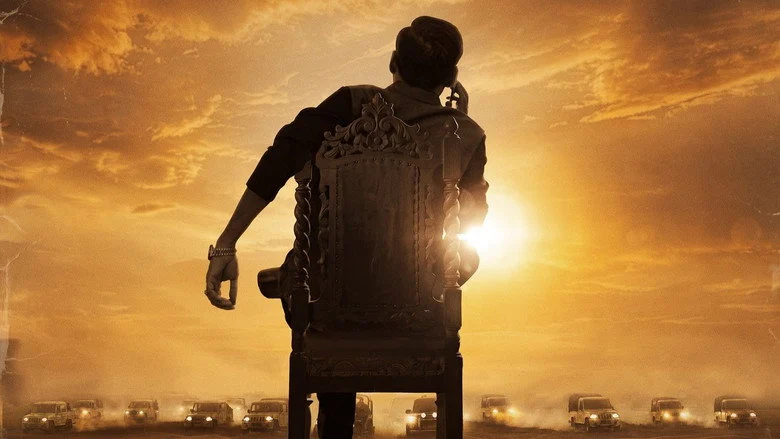
To be fair to Singh, the terrain expansion is real. Moving the operation into desert badlands gives the cinematography room to breathe, and the convoy sequences, jeeps, dust, long lenses, the works, carry a scale the series’ cramped havelis never could. The problem is that scale is doing the work that narrative tension used to do. Every time the film reaches for a wide shot, you can feel it compensating for a scene that doesn’t escalate anything.
Pankaj Tripathi Holds the Line, as Always
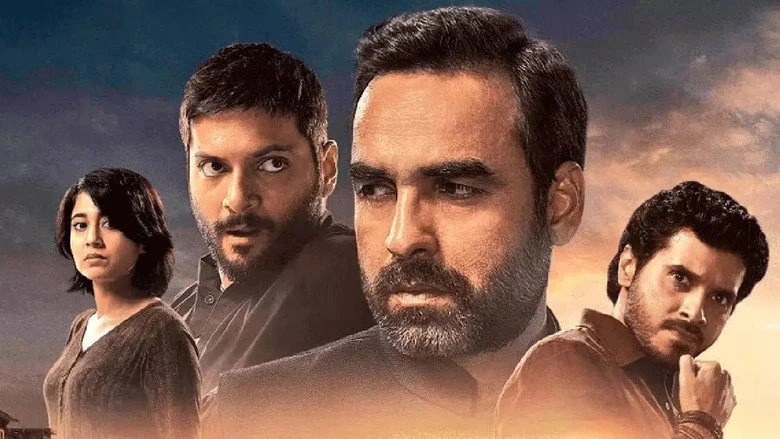
The performances are, predictably, the film’s spine. Pankaj Tripathi’s Kaleen Bhaiya remains the most economical actor in the franchise, he does almost nothing in his confrontation scenes, which is precisely why they land. Watch his hands in the family conflict beats: folded, still, while everyone around him gesticulates. The stillness is the threat. Ali Fazal carries the brawny emotional weight of Guddu competently, though the script gives him fewer interior beats than Season 2 did, and Jitendra Kumar’s Bablu is an effective brainy counterweight even if the recasting echoes are impossible to fully shake.
Ravi Kishan is the genuine find. His torture sequences play like a man genuinely enjoying his work, and the film’s darkest humour lives entirely in his face. It’s the kind of performance that reminds you how much of this franchise’s flavour comes from supporting players doing strange, specific things, the same quality that made Last Man verdict work as a study in pressure applied from the margins rather than the centre.
The Climax Earns Its Bhaukaal; Nothing Before It Does
Here’s where the craft ledger gets honest. The finale is genuinely good, “speedy spurts” is the phrase critics keep reaching for, and it’s accurate. Singh cuts the climactic confrontations with a rhythm the rest of the film lacks, letting violence arrive in short, brutal bursts rather than the flabby, over-choreographed set pieces of the middle act. There’s a sequence where the camera stays low, almost at boot level, and the geography of the fight becomes legible through sound alone: boots, grunts, the specific wetness of a blade. That’s direction. That’s the Gurmmeet Singh who made Season 2’s best episodes.
But the second half’s “flabby bits, ” as the reviews note, are not incidental. They’re structural. The first half builds steadily toward a confrontation that the film then postpones with songs, yes, songs, an unnecessary concession to the theatrical format, and predictable narrative beats that anyone who’s watched the series can call three scenes ahead. The Wire’s assessment that this now resembles “that lone dancing old man long after the music has stopped” is cruel but not wrong. The franchise’s energy has always come from forward momentum; here, the interquel format forces it to tread water for an hour before the finale can justify itself.
If you want a counter-example of how to sustain tension across a long runtime without brand-name armour, our review desk’s take on Hanuman Ansh review is worth revisiting, a film that understood restraint as a genre tool rather than a limitation.
The CBFC Problem, and the Rating Nobody’s Discussing
An A certificate with ten profanity mutes, modified caste references, and a 50% reduction in intimate scenes is not a neutral act of censorship. It’s a rewrite. Mirzapur‘s voice has always been inseparable from its vulgarity, the specific, regional, deeply unserious way these men swear at each other is characterisation, not decoration. Muting it doesn’t sanitise the film; it lobotomises the dialogue track. You can hear the gaps. The Allahabad High Court PIL over obscenity and derogatory references to the real Mirzapur district was declined interim relief, which is the correct outcome, but the CBFC’s preemptive cuts did the plaintiff’s work for them.
What survives is still recognisably Mirzapur, and on a big screen the scale genuinely delivers, the desert sequences, the massy moments, the finale’s rousing punch all justify the theatrical format in a way that, say, a star-heavy ensemble bloat would not. But “justifies the ticket” is a low bar for a franchise that once justified obsession.
Verdict: A Hit That Feels Like a Holding Pattern
The box office doesn’t lie: ₹24.47 crore opening day, ₹100 crore domestic within four days, a worldwide gross north of ₹250 crore against an ₹80–90 crore budget. By any commercial measure, this is a hit, and the trade’s “paisa-vasool” framing is fair for the target audience, series loyalists who want Kaleen Bhaiya on a 70mm screen and Munna back from the dead. They will get exactly that, and they will cheer.
But the critical split, 73% on Rotten Tomatoes but a 6.4/10 average, Bollywood Hungama’s 4/5 sitting awkwardly beside Koimoi’s 2.5, reflects a real fracture. This is a film that delivers the brand without advancing it. Singh’s direction finds new terrain but not new tension; Krishna’s screenplay hits every beat you expect and none you don’t. For a franchise whose entire premise is that power corrupts and nothing is stable, Mirzapur: The Movie is suspiciously comfortable. Fans of the series and mass-audience bhaukaal seekers should book the biggest screen they can find. Anyone hoping the throne room has anything new to say should wait, and revisit the seasons, where the show still had teeth. ★★★☆☆
For more of our coverage of Hindi cinema’s bigger swings and their trade-offs, browse Hindi Thriller reviews.
Ankit Jaiswal is the Chief Author, covering Indian cinema and OTT releases with honest, no-filler criticism. An SEO strategist by background, he brings a research-driven approach to film writing, cutting through hype to tell you exactly what's worth your time.