

Abhinay Deo opens on a 1990s montage that stitches liberalisation, depleted national coffers and a cricket team learning to win again. Somewhere inside that newsreel sits Tara, a girl who does not fit her own household.
The ambition is immediate and unmistakable. The execution is where the argument starts.
When A National Shirt-Wave Becomes A Girl’s Private Vocabulary
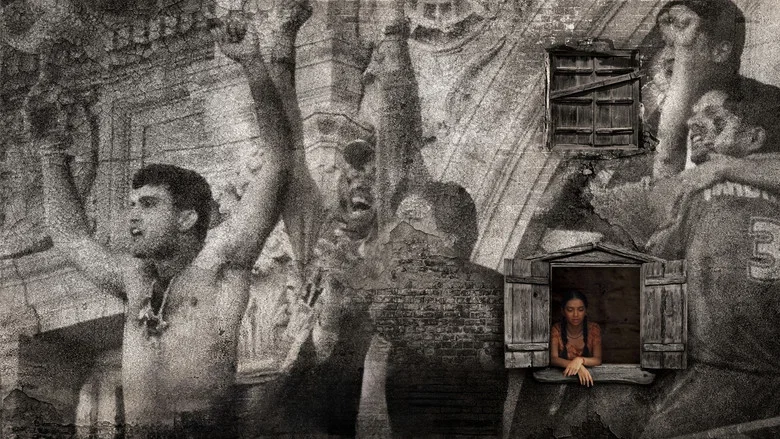
The film’s central wager is that Sourav Ganguly’s shirt, swung from the Lord’s balcony in 2002, can function as a visual grammar for a Rajasthani daughter’s rebellion. It is a genuinely elegant conceit, and for one long stretch it works.
Deo stages the televised celebration as a conversion moment. Tara sits inside an enclosed domestic frame, watching a man in a distant country refuse the etiquette of quiet victory, and something in her posture changes before a word is spoken.
That is the film’s best idea: defiance learned secondhand, through a screen, inside a room that polices everything.
The Docu-Fiction Engine Runs Hotter Than The Drama It Serves
Here is where the machinery begins to betray the premise. The archival and recreated cricket passages carry a documentary authority that the fictional household never quite matches.
Every time the film cuts away to national context, it gains momentum and loses intimacy. Tara’s family conflict is sketched in broad strokes, a father’s surveillance, a mother’s accommodation, a brother’s unearned latitude, and then the film moves on before any of it can calcify into real pressure.
Just as he demonstrated a tighter spatial discipline in Dhood (Sandstorm), Deo clearly understands how to trap a character in an environment. The difference is that here the environment keeps getting interrupted by a history lesson.
Plabita Borthakur Builds Tara Out Of Withheld Reactions
What holds the centre is Borthakur, who plays Tara as a young woman permanently editing herself. Watch her in the family meals: the eyes drop before the sentence finishes, the shoulders angle away from the room’s centre of gravity.
Her performance accumulates rather than announces. The final movement toward speaking openly about her identity reads as the sum of a hundred small suppressions, not a third-act conversion.
The contrast with the broader comedic register she carried into Pehla Pyaar Doosri Baar is instructive. Stripped of banter, she becomes a study in physical containment.
Ankur Vikal Makes Ordinary Domestic Space Feel Like Surveillance
The film’s antagonist is not a villain but a set of rules wearing a father’s face. Ankur Vikal plays him with an unnerving economy, no raised voice, no theatrical cruelty, just a steady assumption that the household exists to confirm his order.
His strongest passages are the quietest: a glance held a beat too long across a dinner table, a question phrased as a verdict. Samidha Guru, as the mother, supplies the generational counterweight, her compliance played as survival rather than weakness.
When the confrontation finally arrives, it lands softer than it should. The film has spent so much time on the national timeline that the private reckoning feels abbreviated.
Ram Sampath’s Score Bridges Two Worlds That Rarely Touch
The score does the connective labour the screenplay sometimes skips, pulling the period texture, the cricketing surge and Tara’s interior drift into a single register. It is the most fluent element of the film’s construction.
Visually, the contrast is deliberate and effective: the low-ceilinged domestic interiors against the wide, floodlit expanse of Lord’s on a television screen. The television itself becomes the film’s most eloquent prop, a window Tara cannot walk through.
At seventy-eight minutes, the compression is both the film’s discipline and its limitation. It avoids bloat, but it also refuses the sustained scenes that would make the ending feel earned.
The Thematic Sibling That Digs Deeper Into The Same Ground
The screenplay resists the kinetic sensationalism that overtook Sumo Didi, opting for a quieter, more essayistic register. That restraint is admirable even when the film’s emotional temperature runs cool.
Both films share a fascination with a body and an identity under external instruction. Doosra simply trusts its audience to assemble the argument from fragments rather than from a fully dramatised confrontation.
It is an intellectually interesting wager. It is not always a satisfying one.
Masha And Rohan Sajdeh Bet On Format Over Familiarity
Produced by Masha Sajdeh and Rohan Sajdeh with Neeta Shah co-producing, the film arrives as a deliberately small, formally restless proposition in a market that rewards scale and franchise recognition.
The commercial math is unforgiving. A sub-eighty-minute docu-fiction hybrid with no conventional star vehicle and a niche cricket-nostalgia hook has limited theatrical headroom, and the absence of a broad mass-entertainer frame narrows it further.
What it does have is a distinctive identity in a crowded release corridor, and that scarcity value may matter more on streaming than in cinemas.
This patient, essayistic approach signals a welcome tonal curiosity across contemporary hindi dramas, even when the experiment outruns its own dramatic foundations.
A Rebellion Borrowed From A Balcony, And The Cost Of Borrowing It
The film’s closing argument is that public defiance can teach private defiance. Ganguly waves a shirt; Tara finds a voice. The parallel is clean, maybe too clean.
What lingers is not the cricket but the room, a girl watching a distant man refuse silence, and quietly deciding she might be allowed the same. Doosra is a promising sketch of a film that keeps reaching for a canvas larger than its seventy-eight minutes can hold.
Ankit Jaiswal is the Chief Author, covering Indian cinema and OTT releases with honest, no-filler criticism. An SEO strategist by background, he brings a research-driven approach to film writing, cutting through hype to tell you exactly what's worth your time.