

Somewhere inside Dharma and Sikhya’s latest, a genuinely dangerous idea lies buried under a pile of mistaken-identity gags. That idea, a Pakistani operative who wakes up believing he is an Indian patriot, is the sort of premise that could turn a spy comedy into something thorny and alive. Udta Teer never quite lets it breathe.
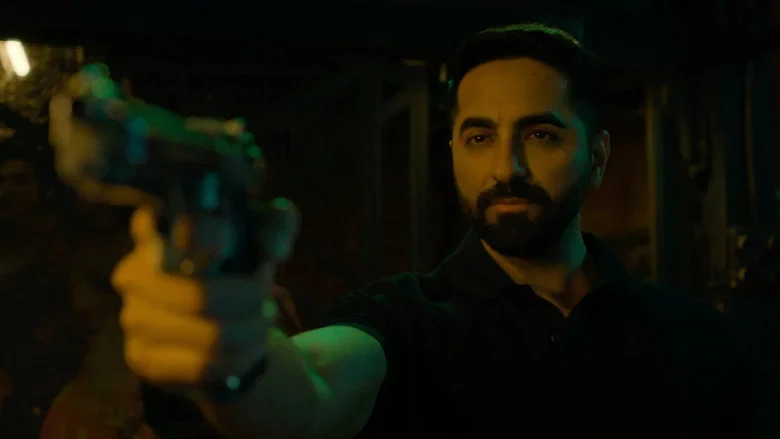
The Blast That Erases a Man and Ignites a Farce
Bilal enters India on a covert mission, and then an accident strips his memory clean. What remains is a man convinced he is serving the other side, a reversal the screenplay treats as a single running joke rather than a slow-burning crisis.
The opening half-hour moves briskly from infiltration to detonation to amnesiac confusion, and the velocity is welcome. But the film mistakes speed for depth, racing past the psychological vertigo of a trained operative who has lost the one thing that made him useful: his certainty.
Director Akash A. Kaushik, working on his debut, understands comic escalation but not yet how to let a scene sit. The premise’s dramatic irony, we know who Bilal really is, he does not, should tighten like a wire, and instead it slackens each time the film reaches for the easy laugh.
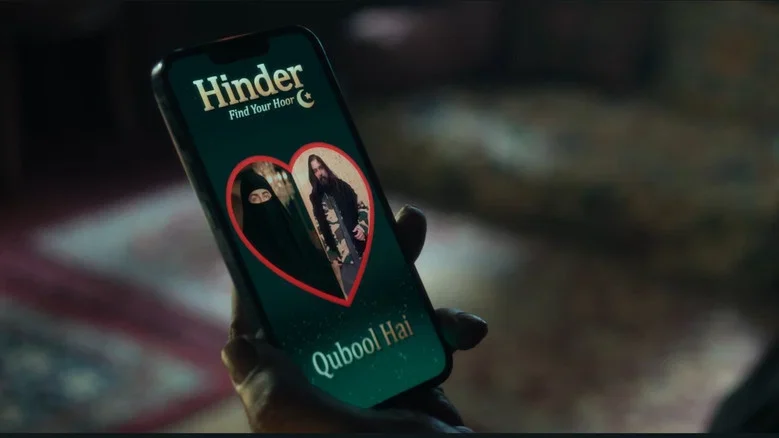
When the Joke Becomes the Entire Engine, the Stakes Die
Indian agencies recruit Bilal, reading his confused devotion as authentic patriotism, and he begins acting against his original handlers while believing he is serving a country he has never actually served. That is a lovely, unstable mechanism for a spy comedy.
The problem is that the film repeats the same beat, institutions misreading Bilal’s behaviour, without escalating the consequences. Each sequence runs the identical joke: someone trusts him, we in the audience wince, and the plot moves on.
The second act expands the misunderstanding into a larger operational conflict, but it also exposes how thin a single gag can stretch across two hours.
Compare the tonal control on display in Jeet Ki Zid, where a soldier’s fractured sense of self is allowed to cost something. Kaushik’s film wants the same vertigo without the price, and the result is a spy comedy that keeps announcing danger while never quite feeling it.
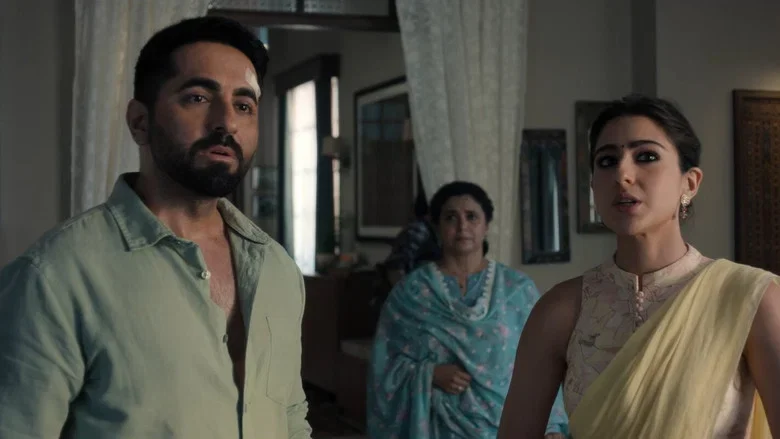
Khurrana’s Double Act, and the Stillness He Is Denied
Ayushmann Khurrana has to play two men at once: the trained operative in the backstory and the sincere patriot who emerges after the blast. His comic instinct is to treat the mistaken patriotism as genuine, and that instinct is correct, the humour lives in Bilal’s total conviction, not in any winking awareness.
Watch his face when an Indian handler praises his loyalty. There is a small, pleased nod, a man accepting a compliment he believes he has earned, and it is the film’s sharpest moment of dramatic irony. Khurrana is doing the work the screenplay should be doing for him.
What he is not given is stillness. The film rarely lets him sit with the horror of a man who cannot remember his own betrayal, and the performance’s best register, the quiet dread beneath the comedy, is repeatedly cut short by a chase or a punchline.
The comic looseness he showed in Pati Patni Aur Woh Do is here, but so is that film’s habit of leaning on repetition instead of discovery.
Sara Ali Khan, as the CTS officer Yamini, supplies the investigative counterforce, and her scenes with Khurrana carry a pleasant friction.
She is asked to evaluate a man she cannot fully read, and her alert, watchful stillness is the right instinct. The screenplay, unfortunately, keeps her at arm’s length from the deception that should be tearing her apart.
The Ensemble Drifts, the Villain Never Arrives
The supporting cast, Rahul Bose, Ram Kapoor, Gulshan Grover among them, register as familiar faces in search of a function. A handler barks an order, an official frowns at a file, and then the film moves on without giving any of them a scene to own.
More damaging is the absence of a coherent antagonist. Bilal’s original Pakistani handlers are meant to function as the opposing force, but the film never gives them a face or a plan worth fearing. A spy comedy lives or dies on the pressure of its opposition, and here the opposition is a rumour.
The result is a film with a strong premise and a weak spine. The identity confusion is the whole show, and once the audience has absorbed the joke, there is nothing underneath it to hold the tension.
The Camera Rushes When It Should Linger
The visual grammar is serviceable but anonymous: bright, clean compositions that keep the action legible without ever finding an image that expresses Bilal’s fractured mind. There is no visual idea for the amnesia, no recurring motif that makes us feel the gap between who he was and who he thinks he is.
The editing is the bigger culprit. The first half sprints through exposition, and the second half repeats the same rhythm, so the film never modulates, no long take to let a realisation land, no held silence to let a lie curdle. The score pushes where the camera should pull.
This is the difference between a comedy that trusts its audience and one that does not. The film keeps explaining the joke, and the explaining is what flattens it.
Dharma’s Bet, and the Limits of the Remake-Adjacent Playbook
Dharma Productions and Sikhya Entertainment are betting on Khurrana’s comic brand and a high-concept premise, and the commercial arithmetic is understandable.
The film was pushed from September to October to find a cleaner window, and the reported advance bookings hovered around ₹2.59 crore, a modest number for a star vehicle with this much marketing muscle behind it.
That softness matters. Khurrana’s theatrical leverage has always depended on novelty, and a mistaken-identity spy farce is not novel enough to generate urgency on its own.
The franchise logic here, a star, a hook, a holiday-adjacent release, is the same playbook that has been thinning across contemporary hindi actions, and the early numbers suggest audiences are beginning to notice.
The film’s real commercial problem is that it has no second act to sell. There is no villain to market, no set-piece that becomes a trailer moment, no emotional turn that word-of-mouth can carry. It is a premise in search of a movie.
The Uncomfortable Question the Film Refuses to Ask
The climax, without spoiling its mechanics, resolves the identity confusion in a way that is tidy rather than unsettling.
The film wants us to laugh at Bilal’s mistaken patriotism and then feel good about the resolution, but it never reckons with the darker implication: that a man can be made loyal by forgetting who he was.
That is the film Udta Teer could have been, a comedy about the frightening malleability of national identity, where allegiance is a function of memory and memory is a thing that can be taken. Instead it settles for a farce that treats its own premise as a punchline.
The final image lingers less than it should, because the film has spent two hours teaching us not to take any of it seriously.
A spy comedy can be silly and still mean something; this one is silly and means to mean something, and the gap between the two is where the whole enterprise leaks air.
Khurrana deserves a sharper vehicle. The premise deserves a braver film. What we have is a competent, occasionally funny, fundamentally weightless exercise, a teer that flies, wobbles, and never quite hits the target.
Ankit Jaiswal is the Chief Author, covering Indian cinema and OTT releases with honest, no-filler criticism. An SEO strategist by background, he brings a research-driven approach to film writing, cutting through hype to tell you exactly what's worth your time.