

Nelson Dilipkumar opens his sequel not with a star entrance but with a manhunt, Dileep sweating a henchman for the whereabouts of a retired jailer who has apparently vanished into domestic ordinariness. The film’s first real promise is that Muthuvel Pandian will be hunted rather than unveiled, and for a stretch the movie believes in that promise.
The Driver’s Seat Is The Only Truly New Idea Here
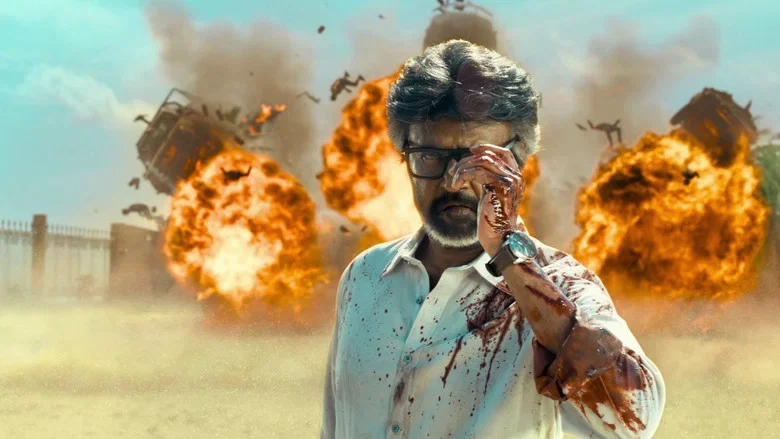
What Nelson gets right, briefly, is the inversion of his own star grammar. Rajinikanth’s Muthuvel spends his early scenes behind a steering wheel, absorbing insults from passengers who have no idea what sits beside them, and the actor plays the concealment with a stillness that is genuinely unfamiliar.
His shoulders stay level. His eyes do the tracking, flicking to mirrors and doorways before his hands ever move. For a performer whose career has been built on the pre-emptive gesture, the withheld one lands harder.
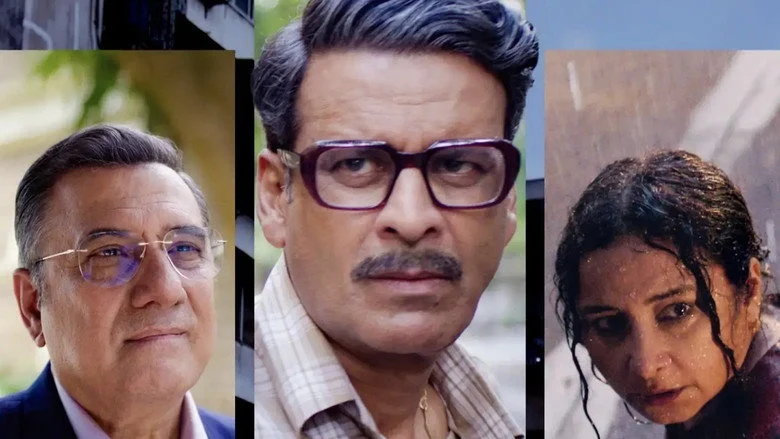
That restraint is the sequel’s most interesting formal decision, and it evaporates the moment the Kalpak family enters the frame. Once Bodhi and Kantha Kalpak arrive with their patriarch in tow, the film stops being about a hunted man and becomes about a hierarchy of villains waiting in a queue.
A Villain Ladder Is Not The Same Thing As A Villain
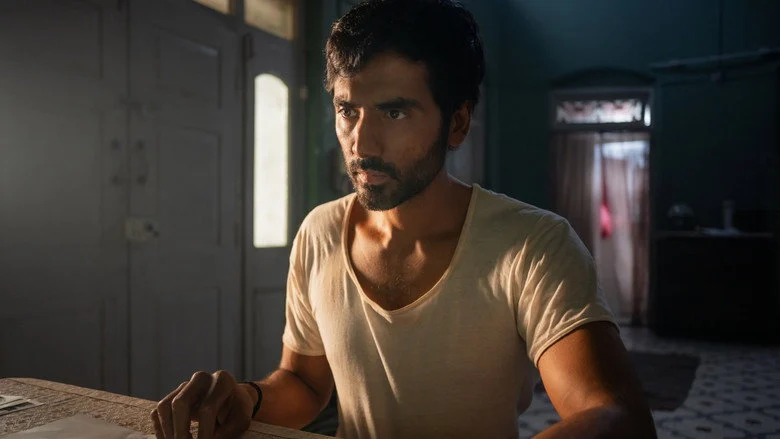
Suraj Venjaramoodu’s Dileep is the film’s cleanest dramatic engine, a man grieving Varman with the specificity of someone who lost a brother rather than a business associate. His interrogation scenes carry a low, patient menace that the rest of the screenplay never quite matches.
Then the movie hands the antagonism upward, and the pressure leaks out. S. J. Suryah’s Bodhi operates at a register of theatrical sneer that belongs to a different film than the one Dileep is starring in. Vidya Balan’s Kantha has presence but no defined function beyond standing near her brother with folded arms.
Mithun Chakraborty’s patriarch is positioned as the final rung, yet the screenplay gives him the least screen aggression of the three. Nelson stacks his villains vertically and forgets that verticality is architecture, not drama. Compare this to the airtight procedural tension of Kara, where a single antagonist with a clear objective generated more dread in ninety minutes than this film manages in nearly three hours.
Anirudh Covers A Structural Wound The Script Cannot Close
The score arrives early and often, and it is doing work the screenplay should be doing. Anirudh Ravichander’s cues swell under scenes that have not earned their own momentum, cuing the audience to feel something the staging has not bothered to construct.
Watch the undercover sequences closely and you can see the problem. The camera holds on Rajinikanth’s face in medium close-up, the strings rise, and the film assumes the tension is present because the music says so. When a director needs his composer to manufacture suspense, the suspense is not there.
The action staging follows the same logic, cutting fast enough that geography becomes optional. Nelson’s earlier work in Afreet – A Never understood that dread lives in what you withhold from the frame. Here he withholds nothing, and the result is noise without weight.
Rajinikanth Holds The Center While The Film Loses Its Own
The star remains the reason to sit in the dark. His return to the “Tiger” register in the second half is executed with an economy that younger mass heroes have forgotten, a single hand gesture and a change in breathing pattern that does more than any slow-motion walk.
But the family material around him stays inert. Ramya Krishnan’s Vijaya exists to be protected, Mirnaa’s Swetha exists to remind us of Arjun’s death, and neither woman is given a scene where she acts on her own behalf. They are stakes, not characters.
The returning cameos compound the diffusion. Mohanlal and Shiva Rajkumar appear as alliance signifiers rather than dramatic participants, and the film treats their presence as a payoff in itself. It plays like a franchise checking boxes instead of a story finding its spine.
Sun Pictures Is Betting The House On A Formula That Is Already Showing Cracks
Sun Pictures and Kalanithi Maran have committed a reported IMAX-scale release to a sequel that is, structurally, a remake of its own premise with more people in the room. The commercial logic is legible: Rajinikanth plus a pan-Indian ensemble plus a proven director equals a festival weekend.
But the exhibition market has shifted. Opening weekend is now decided by fan bookings, and the second weekend is decided by whether word of mouth survives the 2h 45m-plus runtime. This film’s second act is where that word of mouth will be written, and it is the weakest stretch of the movie.
The reported clash with Ranabaali one day later splits the mass audience rather than expanding it. That is not a scheduling problem for one film; it is a sign that contemporary tamil thrillers are being greenlit on star arithmetic rather than on the discipline of a single, focused idea.
The Tiger Returns, But The Hunt Has No Teeth
What the film ultimately argues, perhaps unintentionally, is that a man cannot retire from violence, only postpone it. Muthuvel’s reclamation of his old identity is staged as triumph, but the screenplay never asks what it costs him to become that man again in front of his grandson.
That unanswered question is the sequel’s real failure. The first Jailer understood that the family was the reason for the violence. This one treats the family as the excuse for a bigger set piece, and the emotional arithmetic never balances.
Rajinikanth gives the film a center it does not deserve, and Dileep gives it a wound it does not explore. Everything else is a Comrade Kalyan-style escalation without a destination, a movie that keeps adding villains because it has forgotten how to make one of them matter. The Tiger is back. The hunt, unfortunately, is not.
Ankit Jaiswal is the Chief Author, covering Indian cinema and OTT releases with honest, no-filler criticism. An SEO strategist by background, he brings a research-driven approach to film writing, cutting through hype to tell you exactly what's worth your time.