

Vinod Kapri opens on a precipice, and the film never quite steps back from the edge. An aging goatherd named Padam leads his ailing wife toward the rim of a Kumaon ridge and proposes they end it together, a gesture so matter-of-fact it lands like a household chore.
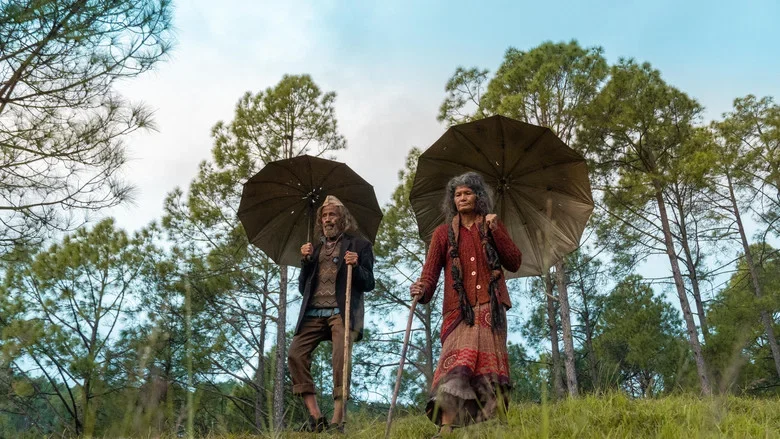
When Death Is Proposed Like a Chore, the Drama Begins
Tulsi refuses. That single refusal is the engine of Kapri’s film, and it is a quietly radical one: the wife does not deliver a speech about hope, she simply declines to cooperate with despair.
From there, the couple’s routine becomes the plot. Tulsi’s body fails, the hospital sits downhill and out of reach, and Padam’s goats become currency against medical bills. Geography is not scenery here; it is the antagonist.
Kapri treats migration as a physical emptying rather than a talking point, and the shrinking village registers in what the frame withholds, absent young faces, doors that no longer open.
It is a discipline of omission that recalls the gentle single-track focus of Little Thomas, though Kapri’s register is starker, less forgiving of its own silences.
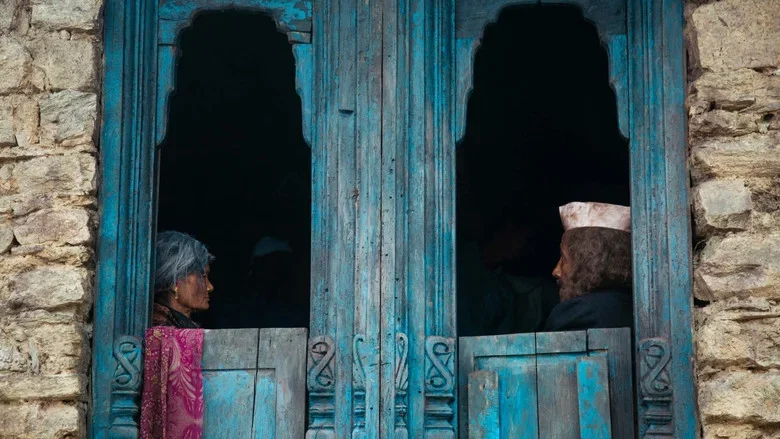
The Postman Arrives, and the Film Changes Its Breathing
Midway through, a letter arrives: the son who left for Mumbai nearly three decades ago says he will come home. The couple’s posture changes before their dialogue does, backs straighten, chores acquire purpose, the waiting acquires a deadline.
It is the screenplay’s smartest pivot, converting an off-screen absence into an active dramatic presence without ever showing the man. The letter is an ordinary object carrying three decades of accumulated expectation, and Kapri lets the weight sit rather than explodes it.
What follows is where the film’s structural patience starts to cost it. The waiting stretches, the routines repeat, and the editing never finds a rhythm sharp enough to make repetition feel like accumulation rather than stasis.
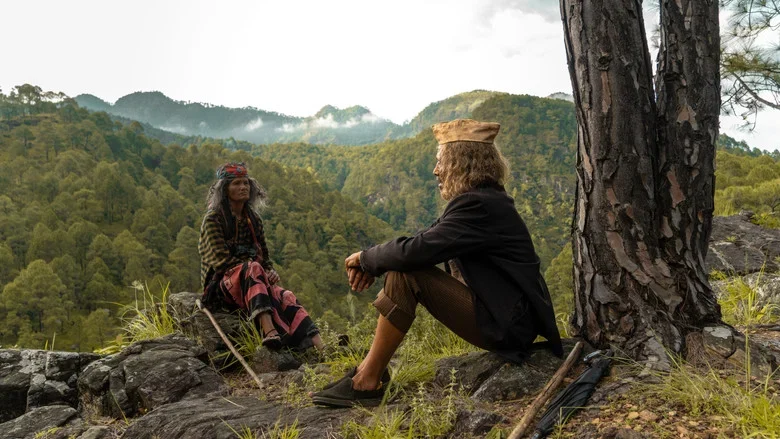
Padam Singh Kapri’s Body Does the Writing
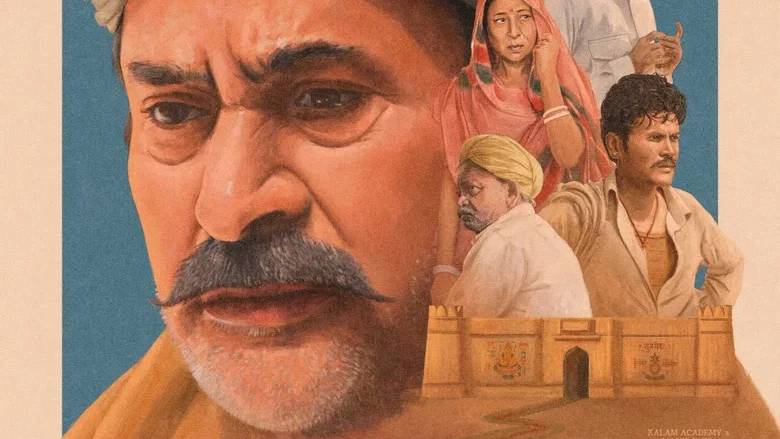
The central performance is drawn from a non-professional, and it shows in the best sense. Padam Singh Kapri registers fatigue through the mechanics of lifting, hauling and climbing; his despair arrives as a practical conclusion, not a breakdown.
Watch him trade the goats. The transaction is brief, unsentimental, and devastating precisely because he never asks to be seen grieving. Love is expressed as resource sacrifice, and the film trusts the audience to read it.
Hira Devi’s Tulsi is the counterweight, she gives the marriage an active internal opposition rather than passive suffering. Her declining health turns every journey downhill into a fresh source of tension, and her resistance to Padam’s death wish keeps the film from curdling into pure elegy.
The restraint on display echoes the disciplined economy of Doosra, though Kapri’s film is more coherent in its emotional architecture.
Around them, Sadab Khan’s Bishan and Shubham Chaudhary’s Jeevan function as the last threads of a social fabric, pivotal to the couple’s uncertainty yet never permitted to become plot devices. The village ensemble exists as texture, not machinery.
The Mountain as Co-Author, and the Editing as Saboteur
The cinematography earns its keep by treating the Kumaon terrain as a visual barrier rather than a postcard. Two elderly figures are placed against exposed Himalayan scale, and the asymmetry does the thematic work without a line of exposition.
The music is soulful and largely unobtrusive, though it occasionally nudges where the images already suffice. The real problem is the cut: the middle passages drift when they should tighten, and the film’s meditative mode tips into repetition.
That is a genuine cost. A film this austere lives or dies on the precision of its rhythm, and here the rhythm stumbles, not fatally, but enough to test patience.
Thematically, the film shares DNA with the sincere body-reclamation arc of Sumo Didi, but where that film leaned on conventional uplift, this one refuses consolation outright.
What the Box Office Will and Won’t Forgive
The commercial math is unforgiving for a film like this. A non-star cast, a Kumaoni-Hindi register, and a mortality drama with no antagonist do not translate into opening-weekend heat, and the early trade figures are too thin to read as anything but a soft launch.
What is at stake is not a franchise but a mode of production. This is the kind of small-scale, regionally rooted drama that sustains a theatrical ecosystem only if exhibitors grant it screens long enough to find its audience, and that patience is increasingly scarce.
The film’s real leverage is critical longevity rather than box-office muscle. It will likely perform better as a word-of-mouth discovery than as a theatrical event, which is a quiet indictment of how contemporary hindi dramas are now marketed and monetized.
The Pyre We All Eventually Need Someone to Light
The title is not decoration. It names the couple’s deepest fear: dying without anyone to perform the last rites, unmourned on a mountain no one visits anymore.
Kapri’s film does not resolve that fear so much as hold it up to the light. The son’s promised return is hope and threat at once, a possible repair, or merely the exposure of damage three decades deep.
What lingers is not the plot but the posture: two old people refusing to surrender separately. It is a film about the terror of being the last one left, and it earns its final quiet by never pretending that love answers everything.
Ankit Jaiswal is the Chief Author, covering Indian cinema and OTT releases with honest, no-filler criticism. An SEO strategist by background, he brings a research-driven approach to film writing, cutting through hype to tell you exactly what's worth your time.