

A boy loses his mother, and the chant that follows the loss, “Ram Ram”, becomes service, food, and a lifetime of walking North India. Vishal Chaturvedi builds that search in twenty-two shooting days on a two-crore budget, where the plainness of every frame is doing the arguing.
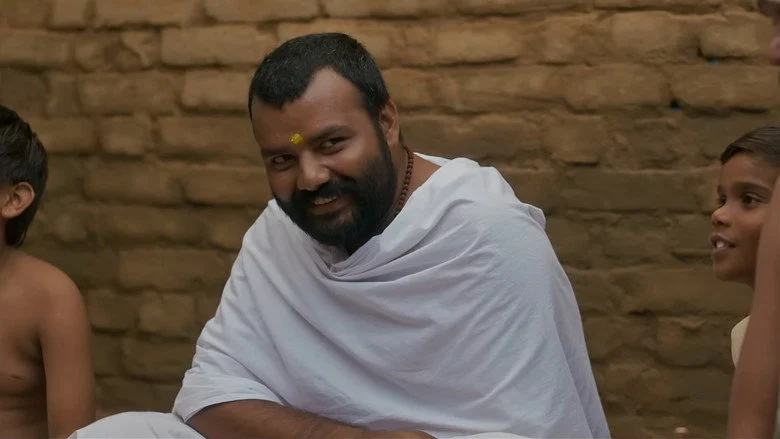
Shobhinaw Satyaa Plays the Saint Like a Man Still Searching
Satyaa’s Neem Karoli Baba is assembled from conviction rather than resemblance, and it is the film’s most reliable asset. That conviction holds in the quiet stretches, where grief and devotion share one face without either cancelling the other.
I have watched devotional biopics collapse into posing; Satyaa never does, even when the script gives him nothing new to play. Stillness is harder to fake than rage, and the film leans on that.
Chaturvedi’s Script Knows Its Source and Forgets Its Clock
Chaturvedi adapts his own book, Divine Detour: That Changed My Life, and the linear spine keeps the pilgrimage legible from loss to service. The flaw is the clock: 150 minutes of real events with almost no shaping between them.
DNA India’s Simran Singh put the difficulty exactly: “It does move you, leaves you impressed, not with the filmmaking, but with the journey of Baba, which deserves to be discussed.” Three and a half stars out of five says the same thing in half the words.
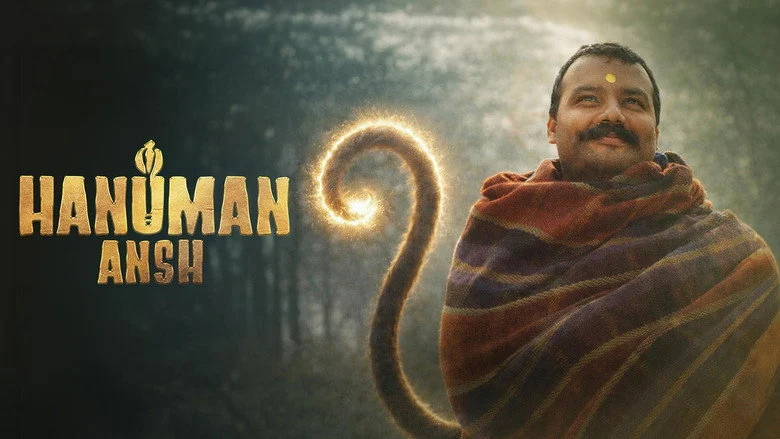
The “Ram Ram” Chant Carries More Weight Than Any Setpiece
Devotional biography trades in transformation, and this one pays in increments: a grieving boy, a mentor, a longer road. The register never competes with the drama on either side of it; it replaces the drama. Three acts compress into the rhythm of a pilgrimage, and the film trusts that rhythm.
The film’s texture earns its loudest audience praise, with the Braj region reading authentically on screen. Service through food becomes the recurring image of faith, which is the correct instinct for a story built on feeding people. It also gives the film its only recurring visual argument: that faith is mostly labour.
The middle act travels and rarely escalates, the honest trade of a twenty-two-day schedule and a script written in under a month. Sincerity sits inside the frame; stylistic risk never does. Nothing here risks a single arresting composition, and devotion is expected to cover the gap.
Chandan K Anand Gives the Devotion Some Earthly Weight
Anand plays Ram Nandan Bhosale, and the casting signals a film that wants a worldly counterweight to Satyaa’s inwardness. His grounded register keeps a saint’s story from drifting free of the ground it actually walks on.
Purnima Tiwari’s Ram Beti supplies the domestic side of devotion that hagiography usually skips. Her presence says Chaturvedi wanted village life remembered, not only miracles catalogued.
Anil Rastogi’s Mahant Ji and Hunny Bakshi’s Maharaj Ji fill the institutional religious world with faces rather than friction. Gulshan Pandey and Bhagvandas Patel round out a cast that functions as texture by design.
There is no antagonist in this film, and that single decision shapes every scene the supporting players enter. None of them is given a moment built to steal the film, which is deliberate and slightly frustrating. A story this long could use one voice that argues back.
Few Hindi films let belief drive the plot instead of the marketing, so Hindi Drama reviews makes for useful company after this one.
Taran Adarsh Called It 2026’s Biggest Success Story, and the Numbers Agree
Audiences have pushed it to 8.9 on IMDb across 8.6K votes, far above DNA India’s 3.5 out of 5. The box office followed the word of mouth: ₹10 lakh net on day one and ₹1.08 crore net in week one against a ₹2 crore budget, as reported by Mathrubhumi English.
Trade analyst Taran Adarsh called it “the biggest success story of 2026, ” and on return on investment he has the arithmetic. The missed Oscar submission deadline, a small team focused on dubbing and releases, per producer Namrata Singh, reads as a footnote, not a scandal.
If you go for craft, you will find a film that mostly steps aside and lets a life speak for itself. If you go for the life, the chanting, the feeding, the long road, it holds you for most of its 150 minutes.
Watch it in a regular theatre, not for spectacle, but for a hall that stays quiet.
That same refusal to fold, one man holding his ground while everyone around him negotiates, runs through Last Man review.
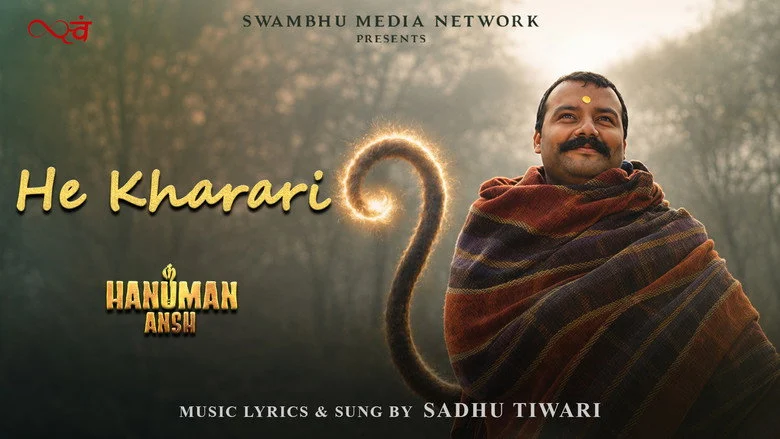
Hanuman Ansh earns a 3.5 out of 5 for the journey it delivers and the filmmaking it never attempts, and it deserves a theatrical visit from anyone who wants cinema to sit still with a subject.
Like this film, Haiwaan rests its entire dramatic weight on Haiwaan verdict, and both live or die there.
Ankit Jaiswal is the Chief Author, covering Indian cinema and OTT releases with honest, no-filler criticism. An SEO strategist by background, he brings a research-driven approach to film writing, cutting through hype to tell you exactly what's worth your time.