

A blind caretaker identifies every visitor by the weight of their footsteps on the stairwell, the scent of their soap, the pause before they knock. In Haiwaan, that gift is the only thing standing between a judge’s daughter and a vengeful killer, and the film spends it far too early.
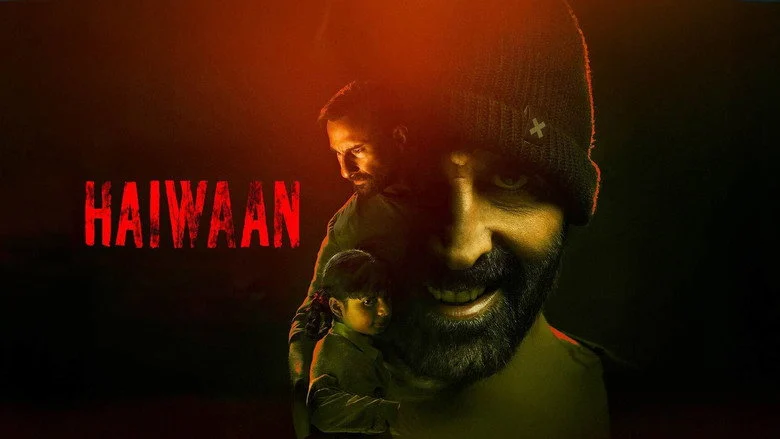
Saif Ali Khan Hears What the Script Refuses to Show
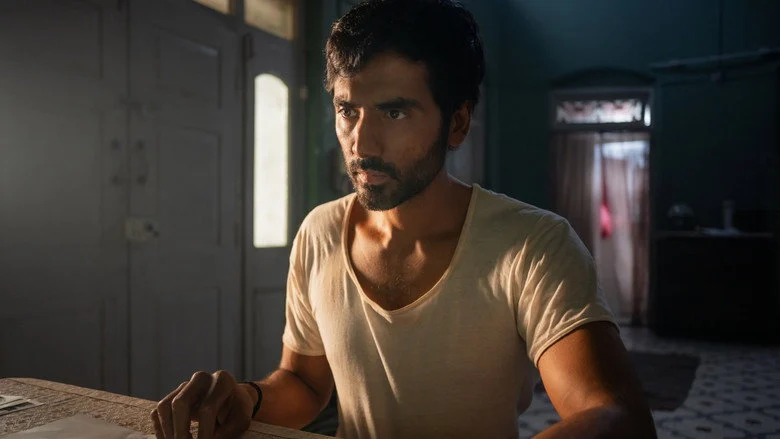
Saif Ali Khan plays Shyam Rane with a careful, listening stillness; his best passages are pure deduction, not dialogue. He reads a threat through sound and scent before anyone else in the frame reacts, and his hands tell more story than his lines do.
The framing sequence works because his senses are credible and his luck is not. What he is not given is a fight worth his physicality, so restraint carries scenes the screenplay leaves hollow. Audiences have singled out this performance as the film’s strongest asset, and they are not wrong.
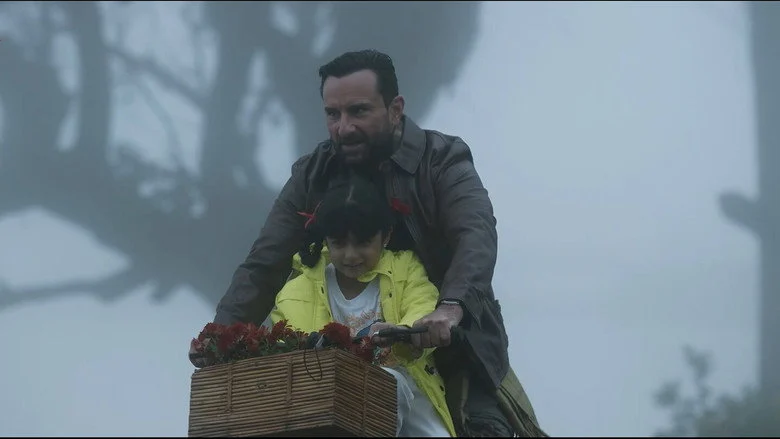
Priyadarshan Builds the Trap, Then Mislays the Walls
The director’s first half is genuinely patient, establishing Shyam’s finances, his building, and Judge Pradhan’s buried secret with clean economy. Priyadarshan, adapting his own Oppam with Rohan Shankar and Abilash Nair, knows exactly where the pressure points sit.
The flaw is tonal, and it compounds. Comedy, dread and procedural detail get mixed with no governing hand, so the second half sinks into an unintentional comic police procedural. A faithful remake can still find its own rhythm; this one borrows the structure and loses the pulse.
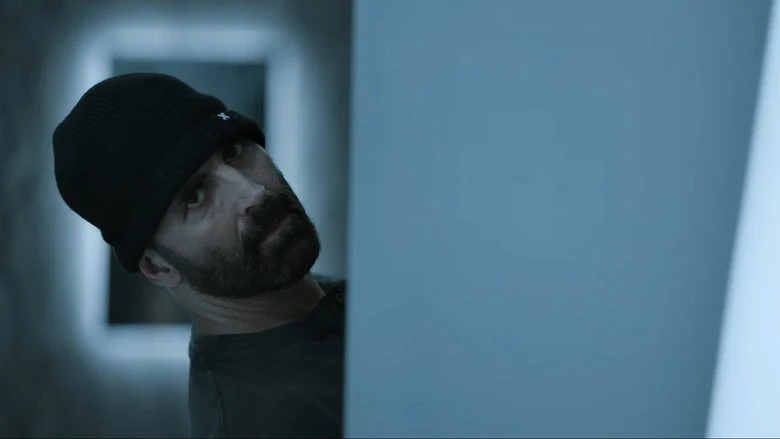
Shyam Mapping a Corridor Beats Every Chase That Follows
The film’s suspense depends on senses the audience cannot share, hearing, scent, spatial memory, and the early building sequences are staged with real invention. Shyam mapping a corridor he cannot see is the genre working at its best, tension built from information rather than volume.
Once Parshuram’s pursuit takes over, the crime-thriller grammar thins into routine foot chases and confrontations. Akshay Kumar’s killer arrives with almost no dialogue, and the menace never fills that silence. The framing of an innocent man should tighten the screws; here it mostly parks the plot while subplots wander off.
I kept waiting for one confrontation to land with real weight, and it never came. Critics were blunter: the Indian Express called it “more miss than hit, more uff than ole ole, ” and Deccan Herald noted Akshay “makes no impact… fails as the revenge-seeking serial killer.”
For anyone inclined to rank this against the genre’s stronger nights, the Hindi Thriller reviews archive is where that argument gets settled.
Boman Irani Holds the Frame While the Comic Relief Frays
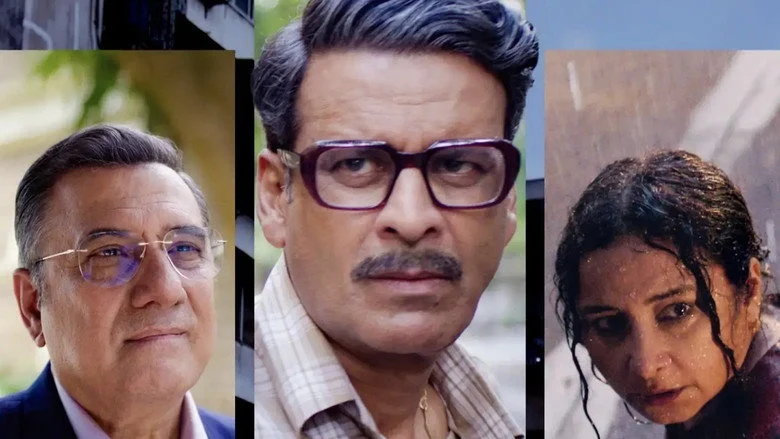
Boman Irani gives the film its spine as Judge Pradhan, a conscience-stricken man whose buried decision powers everyone else’s violence. He plays consequence rather than plot, and his first-half scenes are the only ones carrying moral weight. Without him, the middle hour has nothing to grip.
Rajpal Yadav’s Chandu and Sharib Hashmi’s Inspector Shinde are drafted for relief, and both are wasted. Yadav leans on a familiar stammer, Hashmi on procedural busywork, and neither finds a laugh that survives the edit. Their scenes stall the investigation rather than lightening it.
Saiyami Kher’s Inspector Varsha Joshi is competent procedural ballast with no defining scene of her own. Shriya Pilgaonkar’s Naina is written as romantic interest, and the chemistry this thriller leans on never arrives, leaving Saif to play against a chair.
CBFC Trims a Line, and the Film Loses Nothing It Needed
The Central Board required a visual modification, swapped one derogatory sentence for “Dimaag ki vaat laga ke rakh di, ” and replaced a word with “kamina”. None of those edits touch the film’s actual problems, which are a villain without presence and a second half without momentum.
The Indian Express settled on 2 out of 5, Hollywood Reporter India called the film “inane in so many ways, ” and IMDb users sit at 4.8 from more than 10, 000 votes.
The box office moved faster than the reviews. Opening day brought ₹3 crore net in India (India Today) and ₹4.60 crore worldwide (Sacnilk), against a budget estimated between ₹100 crore and ₹130 crore, a flop, not a slow starter.
Haiwaan is worth a look only if you want to study how a strong premise curdles without a villain worth fearing; Saif’s listening scenes are the reason to press play. Otherwise, catch it on streaming, where the second half can be skipped without loss, and expect a remake that never matches Oppam’s grip.
For another story that turns on one decisive pivot and then fights to hold its tension, Transition review makes an instructive double bill.
Haiwaan is a 2-out-of-5 thriller that hands Saif Ali Khan a strong idea and Akshay Kumar nothing to play, stream it only for the first hour.
Gandhari verdict is the other recent thriller that asks a single lead performance to carry a revenge plot alone.
Ankit Jaiswal is the Chief Author, covering Indian cinema and OTT releases with honest, no-filler criticism. An SEO strategist by background, he brings a research-driven approach to film writing, cutting through hype to tell you exactly what's worth your time.