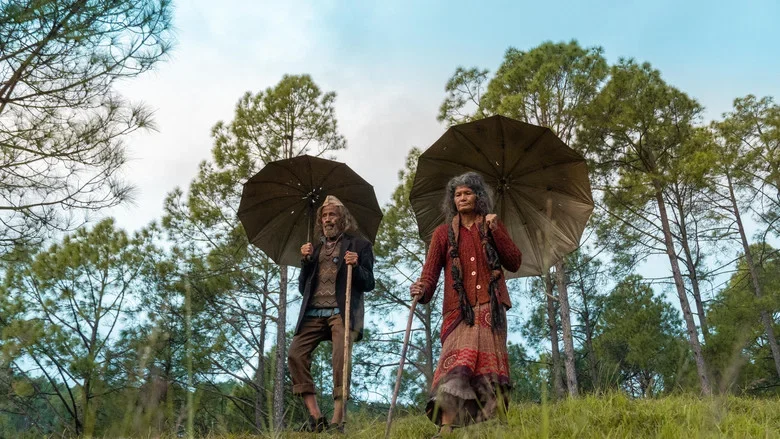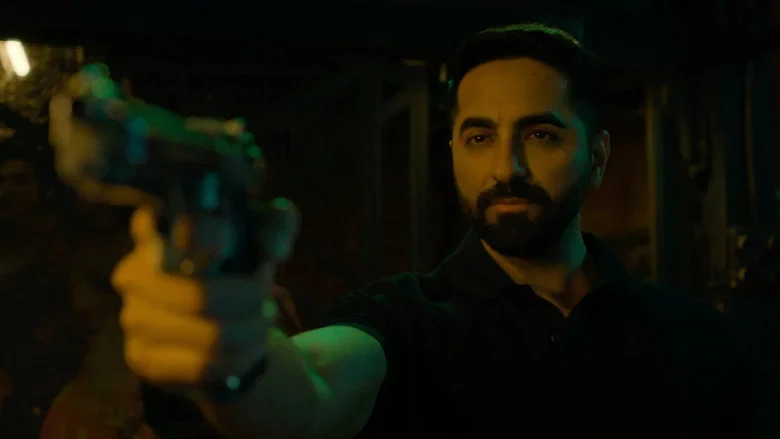


The shortcut through the Uttarakhand pines is the oldest promise in horror, and Rajan Ramgopal Verma’s camera takes it without apology. By the time Aastha opens her eyes inside the mansion, the film has already spent its most honest currency.
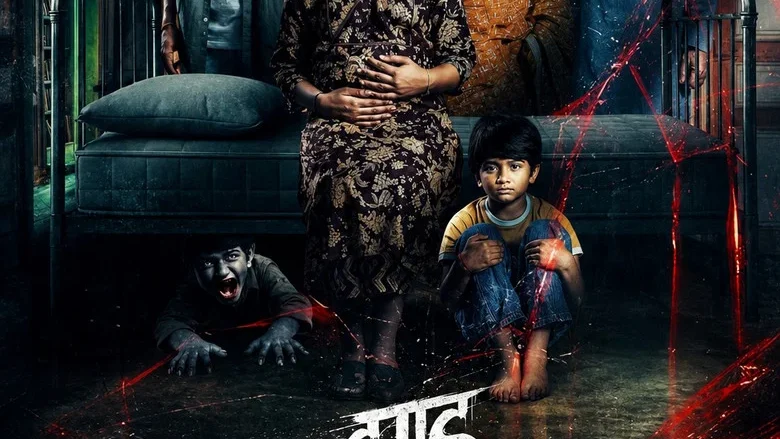
A Pregnant Survivor Is a Better Horror Engine Than Any Ghost
Sumbul Touqeer Khan plays Aastha with her body held tight, one hand permanently braced at her abdomen, and the film is smartest when it refuses to let her forget the weight she is carrying down those corridors.
Every staircase becomes a negotiation. Every offer of tea becomes a question of whether she can afford to trust the hands that poured it.
This is the film’s genuine structural intelligence: pregnancy is not biographical decoration but a mechanical constraint that removes sprinting, removes fighting, removes the option of simply leaving at 2 a.m. through the front door.
When Hospitality Becomes the Villain, Suspense Lives in the Tea Tray
Mohan Thakur’s household greets Aastha with blankets and hot food, and Yashpal Sharma plays the patriarch with a stillness that never quite settles into warmth. He sits with his palms flat on his knees and answers questions a half-beat late, which is the exact rhythm of a man deciding what to withhold.
Padmini Kolhapure’s Kamini works the domestic surface harder, arranging the room around Aastha with a briskness that reads as care until you notice nothing in that house is ever arranged for Aastha’s convenience.
The screenplay by Keyu Shah and Jeet Awjaliya withholds Rajveer’s fate for so long that the withholding itself becomes the plot, and this is where the film’s nerve starts to thin. Suspicion without escalation eventually curdles into stalling.
Just as Verma demonstrated a tighter spatial discipline in Pyre, the mansion here is mapped with real care, but the earlier film trusted its silences to accumulate pressure, while this one keeps reaching for another creaking door to fill the quiet.
The Actor Who Makes Silence Feel Like a Threat Assessment
The strongest passages belong to Sharma, whose Mohan never raises his voice and never fully leaves a room he has supposedly exited. Watch how he stands in the doorway during Aastha’s questioning, one shoulder against the frame, listening to a conversation he has already decided the ending of.
That physical control is the same instrument he brought to Dhood (Sandstorm), where pressure came from men who had nowhere to put their tension. Here the tension has a house to put it in, and the results are quieter and more unnerving.
Touqeer Khan’s work is more uneven. Her recovery scenes carry real physical exhaustion, but once Aastha turns investigator, the performance flattens into a single register of wide-eyed wariness, and the film loses the chance to show her calculating rather than merely fearing.
Apratim Singh’s Moksh gives the mansion a younger presence that keeps the household from feeling like a two-hander, though the boy functions mostly as atmosphere rather than as a character with his own agenda.
Atmosphere Is Not the Same Thing as Dread
Cinematographer Vinod Patil establishes a clean visual grammar: the forest sequence is shot in damp, close greens that crowd the frame, and the mansion interiors are lit in a warm amber that makes the walls feel like they are leaning inward.
The problem is consistency. The film swings between patient, shadow-based tension and sudden sound-cue jolts that belong to a far cheaper movie, and the two registers never fuse into a single vocabulary.
The editing in the second hour leans heavily on delayed disclosure, cutting away from conversations right before the answer arrives, a trick that works twice and then starts to feel like the film is buying time against its own runtime.
The screenplay resists the kinetic sensationalism that overtook Afreet – A Never, opting instead for a slower, more domestic dread, but it never quite commits to the restraint it clearly admires.
What the Mansion Refuses to Explain
By the climax, the household’s concealed danger surfaces, and the supernatural logic behind the refuge is exposed, but the resolution arrives with the air of a contractual obligation rather than a revelation.
Too many of the film’s questions about Rajveer’s disappearance are answered by implication, and implication is not the same as construction. A horror film can leave you unsettled; it should not leave you doing the screenplay’s arithmetic on the drive home.
The film’s examination of how dependence turns shelter into control is genuinely interesting, and it is the thread that keeps the final act from collapsing entirely. It just needed a sharper final knot.
The Commercial Math of a Confined Horror Release
The producing team around Shailesh Parihaar and Vrunda Brahmbhatt has built a film that costs what a single-location horror costs, which is the correct instinct for a market where the mansion thriller remains one of the few reliably profitable formats.
What is murkier is the release strategy. The film is listed for streaming on JioHotstar while other listings describe a theatrical window, and that ambiguity matters, a contained supernatural thriller lives or dies on the collective flinch of a packed Friday night audience.
Touqeer Khan’s television following gives the film a recognizable face for the streaming audience, and Sharma’s presence lends it genre credibility, but neither name currently carries the theatrical leverage to open a wide release on star power alone.
This patient, atmosphere-first approach signals a welcome tonal maturity across contemporary hindi horrors, even as it exposes how thin the margin is between a mood piece and a movie that simply withholds too long.
The Verdict: A House Built on Withheld Information
Jhaad Phoonk understands that the scariest thing in a haunted house is a host who will not answer a direct question, and for roughly ninety minutes it works that idea with real discipline.
Then the answers arrive, and they are smaller than the silence that preceded them. Verma has made a film about a woman trapped by other people’s incomplete accounts of her own life, and its final irony is that it never quite gives a complete account of its own.
Worth the watch for Sharma’s calibrated stillness and for a mansion that earns its dread honestly. Just do not expect the ending to be as carefully furnished as the rooms.
Ankit Jaiswal is the Chief Author, covering Indian cinema and OTT releases with honest, no-filler criticism. An SEO strategist by background, he brings a research-driven approach to film writing, cutting through hype to tell you exactly what's worth your time.