

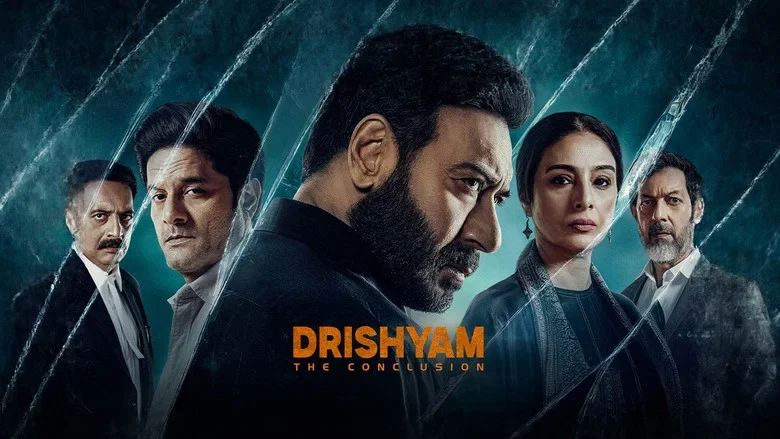
Six months after the Salgaonkars buried their last lie, a Crime Branch officer walks into their world carrying a folder nobody in the family wants opened. That’s the ignition point of Drishyam: The Conclusion, and for roughly its first hour, Abhishek Pathak’s sequel operates with the coiled patience of a man who knows exactly where the bodies are buried, literally and narratively.
Then the film has to start answering its own questions. And that, as any defense attorney will tell you, is where cases get slippery.
The Setup: Same Family, Sharper Knives
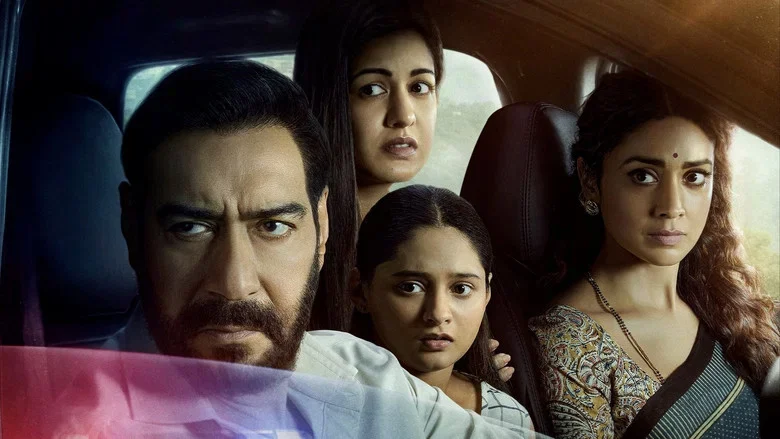
This is a franchise built on a single, elegant engine: a middle-class father who weaponizes ordinariness. Ajay Devgn’s Vijay Salgaonkar doesn’t run from the law; he folds himself into it, using cinema tickets, alibis, and the mundane rhythms of family life as armor. Pathak understands the assignment, and the film’s first act re-establishes this defensive crouch with genuine menace.
The new pressure arrives via Jaideep Ahlawat’s investigator, a man who doesn’t shout so much as loom. His authority is the film’s best weapon, a quiet, procedural dread that makes every family dinner feel like a deposition.
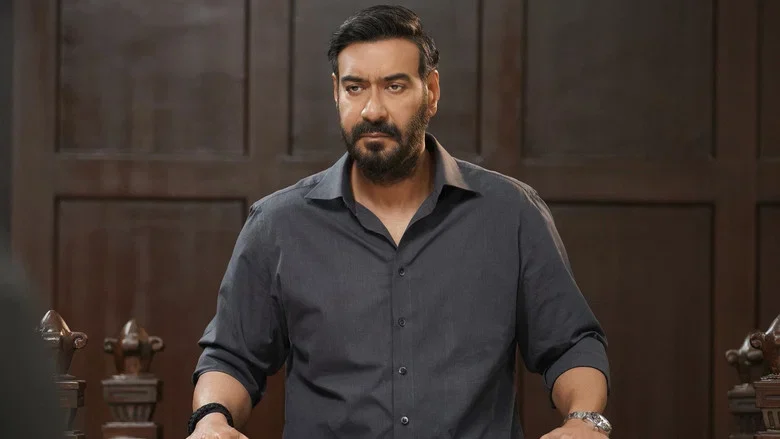
Devgn, for his part, plays Vijay with the same clenched stillness that has defined this role since 2015. It’s a performance of withheld information, and he’s very good at it. But it’s also a performance we’ve now watched three times, and the law of diminishing returns hovers over every stoic reaction shot.
Where The Tension Lives, And Where It Dies
The film’s strongest sequence is its climax, and it earns that distinction through accumulated pressure rather than sudden spectacle. Pathak stages the final confrontation as a battle of competing certainties: Vijay’s unshakeable story versus the investigator’s unshakeable suspicion. The editing tightens, the background score pulls back to near-silence, and for a few minutes the film remembers exactly what made this franchise work.
But the road to that climax is uneven. The middle section leans heavily on familiar beats, the family huddling, the evidence surfacing, the counter-move deployed, and the screenplay by Pathak, Aamil Keeyan Khan, and Parveez Shaikh rarely finds a new angle on old tension. It’s competent. It’s also cautious.
Tabu returns as Meera Deshmukh, and her presence remains the franchise’s emotional grenade. She doesn’t need dialogue to convey vengeance; a single held gaze across a room does the work. But the film underuses her, relegating her to reactive fury rather than active threat. That’s a structural miscalculation the climax can’t fully repair.
Shriya Saran’s Nandini remains the family’s emotional anchor, but she’s given little to do beyond anxious glances. The daughters, Ishita Dutta and Mrunal Jadhav, exist primarily as vulnerability markers, their screen time measured in worried expressions rather than dramatic agency. When your supporting cast is this talented and this underused, the screenplay is the culprit.
The Answers Don’t Always Convince
Here’s the film’s central problem: it’s a mystery that has to resolve, and its resolutions feel more mechanical than revelatory. The new evidence thread, which should crack the case open, instead feels like a plot device deployed to extend runtime rather than deepen stakes.
For a franchise that made its name on the ingenuity of its cover-ups, Drishyam: The Conclusion sometimes forgets that the audience is here for the trick, not just the tension of whether the trick will hold. The film builds beautifully toward a payoff that lands with a thud rather than a gasp.
This isn’t a failure of craft so much as a failure of escalation. The first film surprised us. The second film deepened the lie. This one mostly repeats the pattern with a louder score and a new adversary, and while Ahlawat is a genuine upgrade as a threat, the script doesn’t give him enough new ground to cover.
For another perspective on how sequels handle inherited tension, see our analysis of Peter Rebello, which wrestles with similar questions of legacy and narrative pressure.
A Franchise Running On Fumes
Pathak directs with efficiency. The film moves, the stakes feel real, and the performances are uniformly committed. But there’s a ceiling here, a sense that the filmmakers are protecting an asset rather than challenging it. The cinematography by Sudhir K. Chaudhary favors close-ups and dim interiors, which suits the claustrophobia of the family’s situation, but the visual language rarely surprises.
The background score does its job, swelling at the right moments and retreating when silence serves better. But the film’s sound design never becomes a character the way it did in the franchise’s best moments. It’s competent, not inspired.
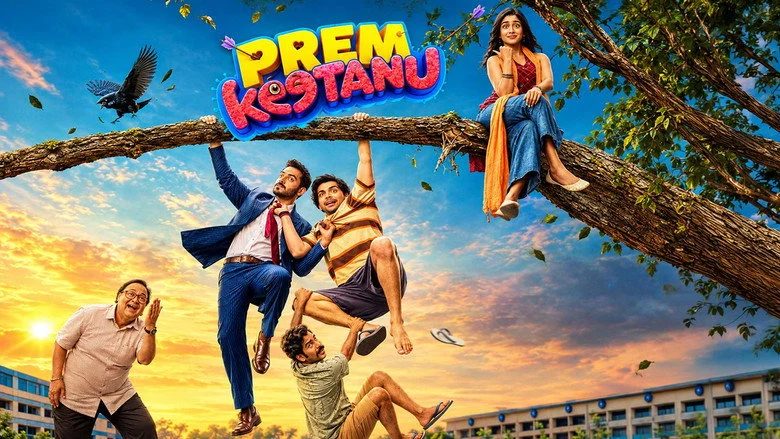
Also on our review desk: our take on Prem Keetanu, another recent release grappling with the weight of expectation.
What Drishyam: The Conclusion gets right is its understanding that this story was never about the crime. It was always about the family, the terrible, ordinary love that makes people do extraordinary things. That theme remains intact. It’s just wrapped in a package that feels more dutiful than urgent.
The Verdict: A Case That Closes, But Doesn’t Quite Satisfy
This is a film that knows its audience and serves them adequately. Devgn’s Vijay remains a compelling figure, a man whose greatest weapon is his refusal to blink. Ahlawat injects genuine menace into a franchise that needed a new antagonist. And the climax delivers enough tension to justify the ticket.
But adequacy isn’t the same as excellence, and this franchise has trained us to expect the latter. The answers feel rushed, the supporting cast feels wasted, and the film never quite finds the nerve to surprise us the way it should.
Watch it if you’re invested in the Salgaonkar saga and want to see how the story ends. Devgn and Ahlawat’s scenes together are worth the price of admission alone.
Skip it if you’re looking for a thriller that reinvents its own formula. This one respects the blueprint too much to break it.
Rating: 2.5/5
For more of our coverage on the latest in cinema, visit our film desk's ongoing reviews.
Ankit Jaiswal is the Chief Author, covering Indian cinema and OTT releases with honest, no-filler criticism. An SEO strategist by background, he brings a research-driven approach to film writing, cutting through hype to tell you exactly what's worth your time.