

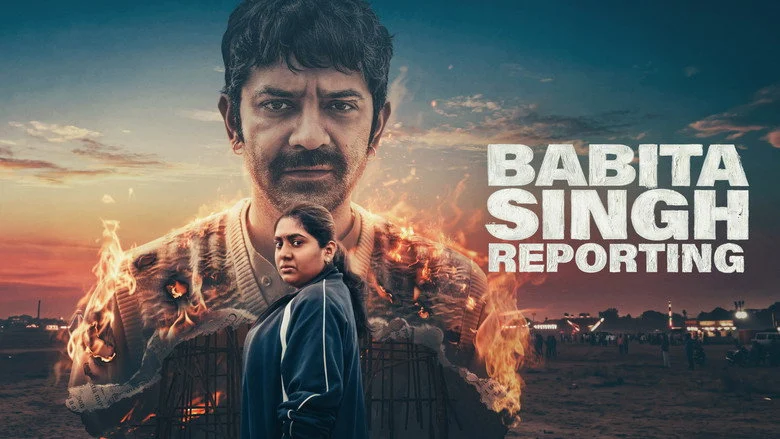
There is a moment early in “Babita Singh Reporting” when the suspended ASI, played with fierce restraint by Nimisha Sajayan, refuses to stop pulling at a thread the department has already dismissed. She is not solving a puzzle for glory; she is digging through the rubble of her own life, and Ambiecka Pandit’s camera stays close enough to catch the tremor beneath the uniform. This is not a thriller that races to its finish, but a character study that walks deliberately toward a truth about self-worth, wrapped in the guise of a murder investigation.
Sajayan’s Shoulders Carry Every Scene’s Weight
The film lives and dies on Nimisha Sajayan, and she delivers a performance that repeatedly rescues the screenplay from its own unevenness. In the confrontational investigation sequences, particularly when Babita asserts herself against institutional dismissal, Sajayan channels a quiet fury that never tips into melodrama.
Critics have consistently pointed to her work as the film’s strongest element, and it is easy to see why. She makes the character’s internal conflict between duty and personal history feel lived-in, not performed.

Pandit’s Direction Balances But Stumbles At The Finish
Director Ambiecka Pandit shows a steady hand in balancing the procedural thread with Babita’s domestic conflicts, keeping the tone restrained and focused on the lead’s inner turmoil. The writing and direction impress in the build-up, earning a solid 3.5 from Times of India, with the publication praising the “quiet, thoughtful investigation into patriarchy and self-worth.”
Yet, the screenplay’s linear structure loses its grip in the final act. The climax, which ties the case to Babita’s past, is widely described as predictable, and the thriller tension that the first half sustains noticeably deflates. Pandit’s strength is in atmosphere, not in delivering a knockout twist.
The Genre Is A Vehicle, Not A Destination
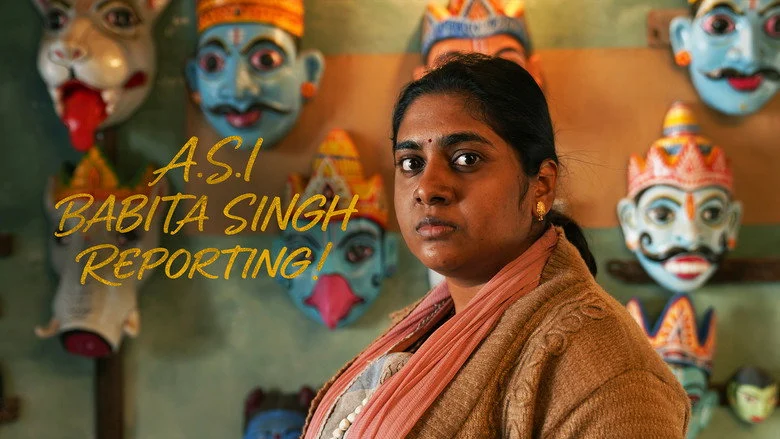
As a crime mystery, “Babita Singh Reporting” deliberately avoids high-octane staging. The investigation is not a standalone puzzle but a mirror into Babita’s emotional life, with the murder case becoming personally connected to her childhood and family history. This choice grounds the genre in character psychology, making every lead feel like a step toward self-discovery rather than just a clue.
The film’s most effective beat is Babita continuing the investigation even after suspension, a scene that encapsulates the central conflict between institutional rejection and personal agency. It is here that the mystery works best, as a tool for social commentary rather than pure suspense.
However, the procedural mechanics weaken when the story shifts toward resolution. The supporting investigative material is thinner than the central performance, and the film never fully commits to being a tense, edge-of-your-seat drama. It is a thoughtful drama that happens to have a crime at its center, which will frustrate viewers expecting a tighter mystery.
Supporting Cast Adds Texture, But Some Are Shortchanged
Anshumaan Pushkar delivers a first-rate supporting turn as Sharad Vashesht, earning positive notice for adding weight to the procedural scenes. Rajesh Kumar, in a brief but effective role as SI Sethi, provides solid support in the interpersonal and investigative exchanges, though his part remains underdeveloped.
Barun Sobti, as Bansi Seni, receives praise for handling his material effectively, but critics note his scope is limited by the screenplay. His presence signals the film’s intent to build a world around Babita, yet the script never gives him the agency to match Sajayan’s dominance.
Audience Reception And The Missing Controversy
With no verified controversy or political backlash surrounding the release, the conversation has stayed firmly on the film’s craft. Audience sentiment mirrors critical opinion: praise for Sajayan’s performance and the woman-centered story, with complaints focused on the predictable ending and underused supporting roles.
This is a film aimed squarely at class audiences and fans of nuanced, female-led dramas. Those expecting a fast-paced commercial thriller will leave disappointed, but viewers invested in character-driven storytelling will find plenty to admire. For a deeper dive into more such nuanced storytelling, you can browse our Hindi Drama reviews.
The film’s visual presentation is notably restrained and grounded, a choice that suits the procedural tone, even if the background score fails to leave a distinct mark. At 107 minutes, it is a tight, efficient runtime that respects the viewer’s time, though it never quite escapes the shadow of its own predictable structure. Sajayan’s performance is the reason to watch, but the film around her is a mixed bag of strong intentions and weak payoffs.
If you are a fan of Sajayan’s work or appreciate cinema that uses a crime plot to explore social systems, this is a worthy OTT watch. Go for the performance, stay for the restrained direction, and accept that the climax will not surprise you. It is a film that values character over plot, and that is both its strength and its limitation.
“Babita Singh Reporting” earns a solid 3 out of 5 for Sajayan’s commanding presence, even as its predictable climax keeps it from being a truly great mystery.
For a similar exploration of character over plot, check out our take on Toxic review.
And for another film that struggles with its own premise, see our review of Beyond Ratings verdict.
Ankit Jaiswal is the Chief Author, covering Indian cinema and OTT releases with honest, no-filler criticism. An SEO strategist by background, he brings a research-driven approach to film writing, cutting through hype to tell you exactly what's worth your time.