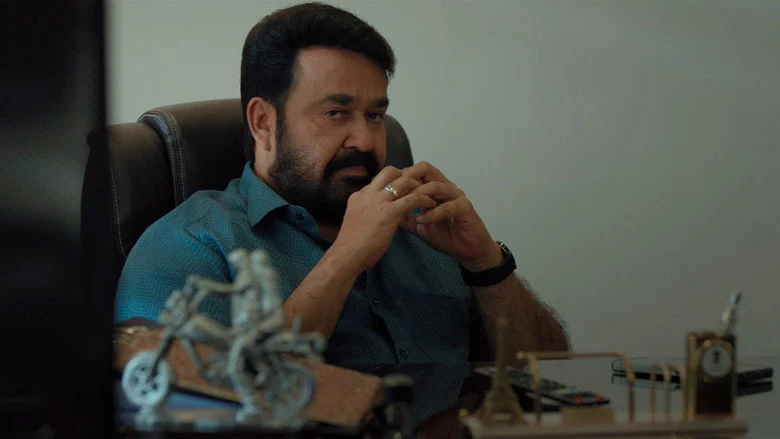


Kaali emerges from a kerosene-dealer’s monotony into the shadow of Dhak Deva’s criminal empire, each misstep pulling him deeper into Bengaluru’s 1970s underworld. What begins as petty survival becomes a descent into violence, where family loyalty and personal identity fracture under the weight of revenge.
Director Prem constructs a crime world with genuine architectural clarity, but the film’s loudness and jarring tonal swings suggest ambition outpacing control. This is an action thriller that demands submission rather than inviting it, a risk that occasionally pays, and frequently exhausts.
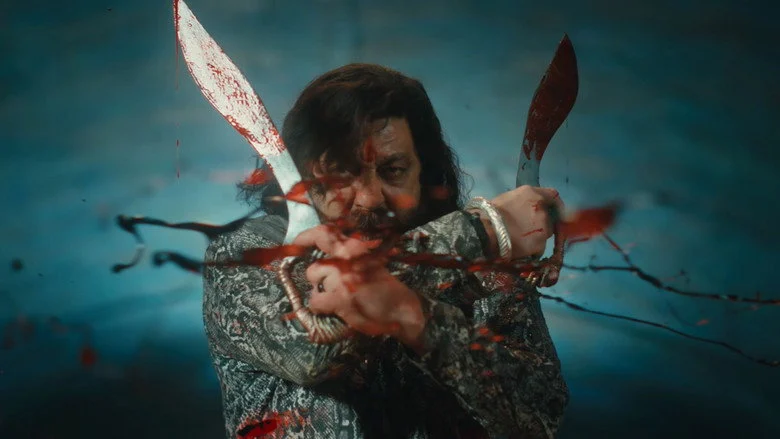
Dhruva Sarja Holds a Demanding Scaffold Alone
Dhruva Sarja carries the entire 141-minute weight as Kaali transforms from an underdog of limited ambitions into a feared criminal figure. His role requires a precise modulation, naive vulnerability in Act One, mounting pressure in Act Two, and hardened survival instinct by the climax. He executes this arc with physical credibility and emotional anchoring that keeps the film from collapsing under its own uncompromising presentation.
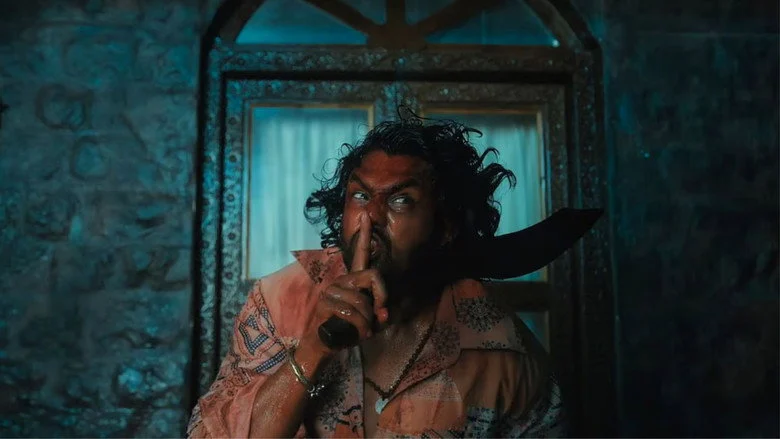
Prem’s Strong World-Building Collides With Tonal Jaggedness
The director establishes the 1970s Bengaluru crime setting with authoritative visual texture and designs the brother-sentiment framework as his emotional spine, a departure from typical mass-drama mother-sentiment structures. Yet the execution stumbles; reviews consistently flag the loud, overbearing presentation and jarring tonal shifts that distance rather than immerse. Nearly two and a half hours of uncompromising intensity becomes tiring without sufficient breathing room.
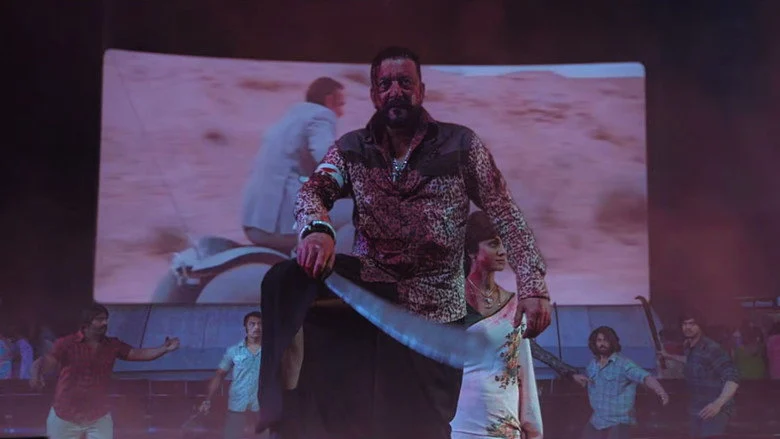
The Action-Thriller Scaffold Rests on Familiar Scaffolding
The underdog-to-underworld transformation operates as genre shorthand here, following a well-worn Kannada cinema template. Mass-appeal star moments, particularly the Sudeepa cameo, function as confrontational punctuation rather than organic plot progression. The crime hierarchy escalates through recognizable beats of loyalty, betrayal, and retaliation without offering fresh angles on the descent.
What distinguishes this execution is the brother-conflict layering, where Kaali simultaneously fears his principled brother Dharma while admiring the feared don who destroys him. This Rama-Lakshmana and Rama-Bharata parallel gives the film thematic weight beyond standard revenge mechanics. The visual framing supports a gritty atmosphere that tracks Kaali’s transformation from accidental criminality to survival-driven brutality.
Yet pacing remains uneven across the runtime. The first half dwells in character and setup; the second accelerates through conflict with increasing urgency. This imbalance reflects directorial choice rather than structural failure, but it strains audience patience across two-plus hours of loud, relentless presentation.
Kannada action reviews often struggle between mass formula and artistic ambition, and this film sits uneasily in that tension. For deeper analysis of contemporary Kannada filmmaking, Kannada Thriller reviews explore these recurring tensions more broadly.
Sudeepa’s Cameo Lands With Calculated Mass Energy
The villain Dhak Deva, embodied by Sudeepa, functions as the gravitational center that warps Kaali’s trajectory. Sudeepa’s presence earns its “mass-appeal moment” designation through sheer star magnetism and calculated screen authority. Reeshma Nanaiah as Lakshmi provides romantic and emotional counterweight but remains subordinate to the crime spine. Ramesh Aravind and V. Ravichandran anchor the family texture without dominating the emotional register.
Excessive Loudness Undermines the Crime Study It Attempts
The film’s greatest tension lies between artistic intention and execution excess. Audiences praise Dhruva’s physical presence and the Sudeepa cameo while criticizing the overwhelming loudness and predictable crime-to-power arc. The A-certificate gory violence feels earned by narrative logic rather than exploitative, yet the presentation frequently overwhelms subtlety. Cinema Express registered a mixed-to-positive 3/5 assessment, reflecting this precise strain between ambition and control.
For those who thrive on uncompromising Kannada action cinema, this delivers intensity without apology. For viewers seeking emotional nuance or tonal balance, the relentless presentation becomes a barrier rather than an asset.
Watch this if you’re invested in Dhruva Sarja’s range or crave a crime drama that refuses to soften its edges. Avoid if you prefer measured pacing or tonal consistency. The runtime demands submission; not everyone will pay that cost.
KD: The Devil commits fully to its vision of crime transformation, delivering a 3/5 action thriller that excels in world-building while struggling with execution discipline.
The brother-sentiment framework connects this film thematically to Krishnavataram Part review, which similarly explores familial conflict alongside mythic resonance.
Prem’s relentless approach to crime storytelling shares DNA with Vaazha II verdict in its commitment to gritty, unpolished realism over mass-cinema gloss.
Ankit Jaiswal is the Chief Author, covering Indian cinema and OTT releases with honest, no-filler criticism. An SEO strategist by background, he brings a research-driven approach to film writing, cutting through hype to tell you exactly what's worth your time.