

Prajapati Pandey wakes to the seismic moment when a badly timed decision fractures the carefully stacked dominos of his marriage. What begins as a forest officer’s stable life in Prayagraj unravels into a cascade of mistaken suspicion, comic chaos, and the inevitable arrival of a third party to accelerate the confusion. The setup is instantly legible, too legible, perhaps.
Mudassar Aziz returns to familiar terrain with Pati Patni Aur Woh Do, a title that signals continuity rather than innovation. The film trades on the architecture of marital farce, the kind where one wrong move triggers a chain reaction of misunderstandings that consume the runtime. It’s a premise that works best when the emotional stakes feel real beneath the laughter; here, they feel dutiful.
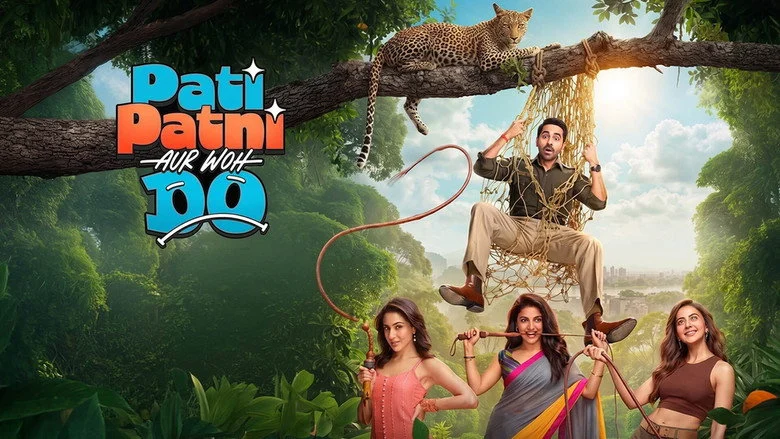
Ayushmann’s Reaction Work Anchors a Narrowing Comedy
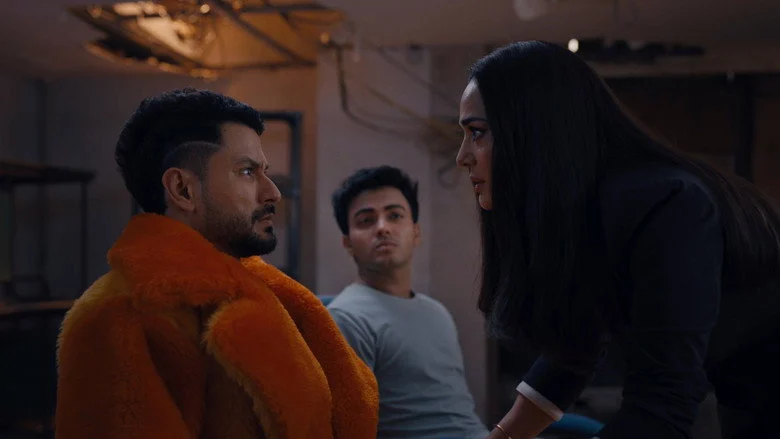
Ayushmann Khurrana has spent his career mining the space between discomfort and charm, and as Prajapati, he’s called upon to do what he does best: register mounting frustration through facial grammar and escalating bewilderment. The role is built almost entirely around reactions, watching him process suspicion, navigate household chaos, and defend himself against phantom accusations. It’s the work of an actor comfortable carrying a film on the sinews of expression rather than explosive moments.
Yet the character design limits what even Khurrana’s considerable skill can achieve. Prajapati is reactive by construction, trapped in a narrative machinery designed to spin him in circles. Without scene-level complexity or emotional texture, his performance becomes a mechanism rather than an arc. The fault lies not in execution but in the thinness of what’s given to execute.
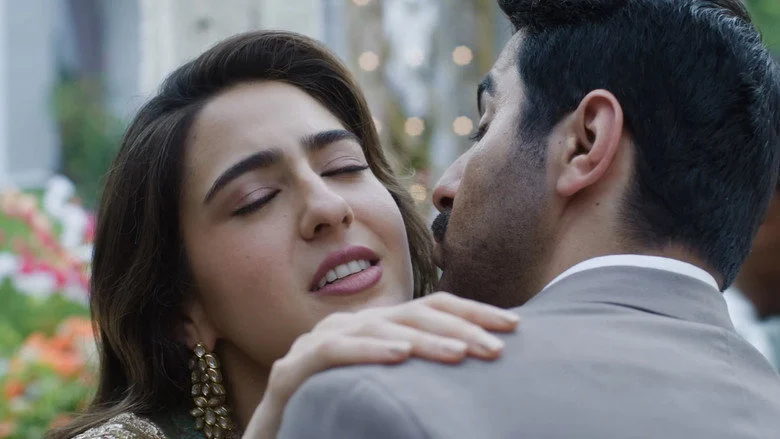
Aziz’s Direction Opts for Commercial Safety Over Comedic Precision
Mudassar Aziz’s core strength, the ability to construct a legible domestic setup and milk misunderstanding mechanics for repeated comedy, is also his film’s structural weakness. The Prayagraj setting and forest-officer premise create a clean comedic stage, yet the direction never moves beyond that stage into moments of surprise or tonal sophistication. The misunderstanding engine churns efficiently but predictably, each escalation telegraphed two scenes ahead.
The screenplay, credited to Aziz and Ravi Kumar, follows a linear trajectory that prioritizes clarity over invention. There are no plot reversals that sting, no comic sequences that build unexpected momentum, no emotional moments that complicate the farce. The film is competent in its design but incurious about its own possibilities.
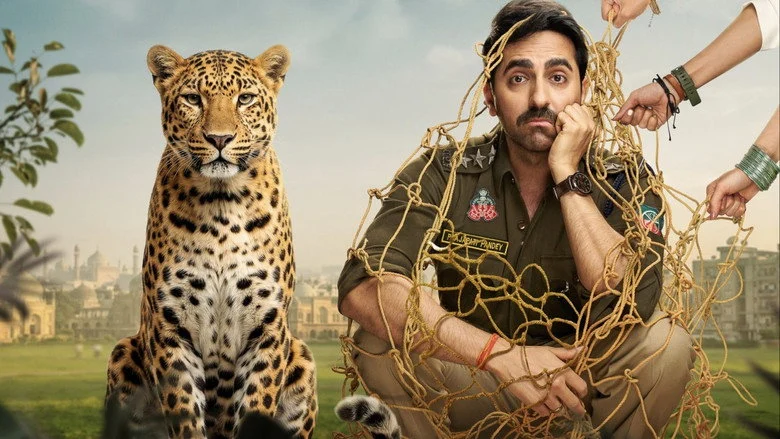
The Comedy Machinery Runs on Empty Repetition
The primary genre work here is comedy built entirely on the engine of mistaken suspicion. The film positions Prajapati between his wife Aparna and the disruptive Chanchal, creating a triangle designed to generate confusion and escalation. Each misunderstanding spawns the next in a chain that feels inevitable rather than earned.
What begins as a neat domestic setup, a married couple’s life disrupted by one wrong decision, should generate genuine unease beneath the laughter, the kind that makes marital farce resonate. Instead, the film treats misunderstanding as pure mechanism, a plot device to be cycled through rather than explored for its emotional truth. The repeated sequences of confusion, suspicion, and comic chaos lack the specificity that transforms repetition into rhythm.
The triangle itself never achieves the comedic or romantic tension it requires. Wamiqa Gabbi’s Aparna is positioned as central to the domestic conflict, while Sara Ali Khan’s Chanchal serves as the disruptive force, yet neither character generates genuine dramatic friction. Their presence feels functional, they exist to move the misunderstanding plot forward, rather than felt as living complications in Prajapati’s world.
Explore more Hindi Comedy reviews to understand how domestic farce can generate both laughter and emotional stakes when filmmakers move beyond mechanical repetition.
Supporting Cast Drowns in Underdeveloped Roles
Rakul Preet Singh, Vijay Raaz, Ayesha Raza, Tigmanshu Dhulia, and others occupy the margins without clear dramatic purpose. Vijay Raaz, an actor whose comedic timing can elevate even thin material, appears stranded in a role that asks little more than presence. The film’s ensemble cast suggests a richer household dynamic than what actually materializes on screen.
Tigmanshu Dhulia’s involvement signals a more complex dramatic texture that never arrives. When actors of this caliber are underutilized, it reflects not their limitation but the film’s lack of ambition in how it structures its supporting world. Each supporting player feels borrowed from a richer film than the one actually made.
The Mixed Response Reflects a Familiar Ceiling
The available coverage indicates the film landed with a mixed theatrical response, and there’s little evidence of strong box office conversation driving sustained interest. The cast pairing, Khurrana, Gabbi, Khan, and Preet Singh, generated attention before release, and the comic misunderstanding premise proved easy for audiences to grasp from trailers. Yet intellectual clarity does not equal emotional investment.
The film’s inability to break through suggests that audiences came with reasonable expectations and left feeling fed but not nourished. A domestic comedy needs either to make us collapse with laughter or to move us by making the domestic stakes feel genuinely threatened. Pati Patni Aur Woh Do achieves neither with conviction, content instead to perform competence at moderate temperatures.
Watch this if you arrive with low expectations and a taste for familiar misunderstanding farce; skip it if you’ve grown tired of the same marital-chaos formula cycling through Hindi commercial cinema. The streaming format suits it better than a theatrical investment.
The film is a competently made but narratively timid romantic comedy that never justifies its own existence, a 2.5 out of 5 that will satisfy neither Ayushmann’s core fanbase nor viewers seeking originality.
Like Chand Mera review, this film relies on cast chemistry to anchor a story about romantic entanglement and household confusion.
Both films share Mudassar Aziz’s tendency toward commercially safe premises over Michael verdict.
Ankit Jaiswal is the Chief Author, covering Indian cinema and OTT releases with honest, no-filler criticism. An SEO strategist by background, he brings a research-driven approach to film writing, cutting through hype to tell you exactly what's worth your time.