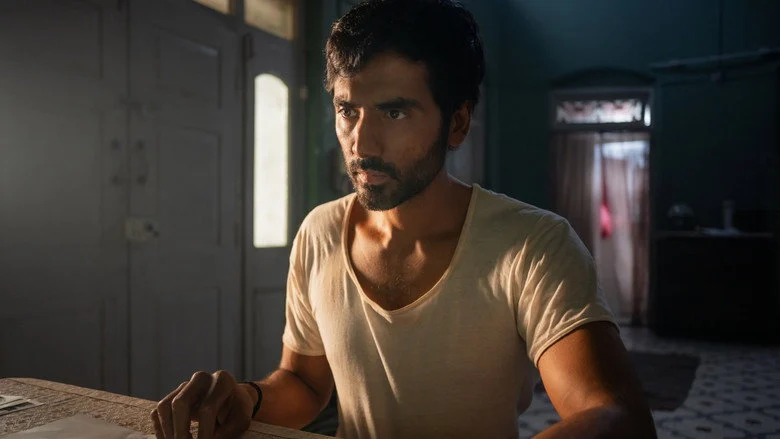


Sudesha Devi moves through the Himalayan foothills with the weight of a village on her shoulders. K. Lalita plays her not as a speech-making leader but as a woman whose domestic routine and protest work are one continuous act of survival.
The performance is built on physical presence rather than dialogue. Lalita conveys the exhaustion of mountain labor and the quiet resolve of organized resistance without theatrical flourishes. It is a portrait of political agency earned through daily repetition, not dramatic revelation.
The Yugantar Collective’s Direction Prioritizes Evidence Over Emotion
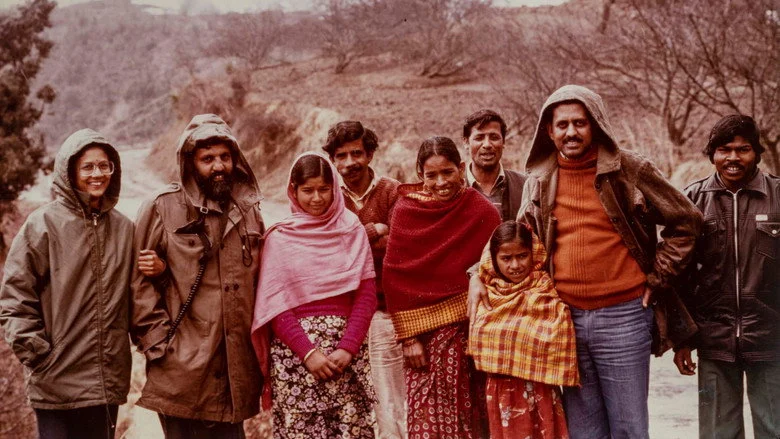
The Yugantar Film Collective directs with a documentarian’s discipline, letting the terrain and the women’s labor carry the argument. The framing consistently links landscape to social conflict, making the forest a character rather than a backdrop.
The linear structure serves the material well, but the short runtime limits narrative depth. The screenplay moves efficiently from setup to imprisonment, yet some transitions feel compressed, leaving the political context underdeveloped for viewers unfamiliar with the Chipko movement.
Documentary Craft Turns Observation Into Testimony
The film’s genre-core execution is its strongest suit, grounding environmental history in lived experience. The women’s daily labor, carrying firewood, managing households, sustaining the village while men work away, is presented as evidence of both dependence and resilience. The camera observes without intruding, letting the routine speak for itself.
One sequence links this labor directly to the forest threat, showing women performing most village work while timber extraction looms as an existential pressure. The editing rhythm establishes the political setup in the first half, then shifts toward protest consequences with a more consequential finish in the second.
Sudesha’s imprisonment arrives as a logical outcome of the conflict, not a sensational twist. The film treats activism as lived practice, connecting personal routine to collective movement without romanticizing sacrifice. Sound credit goes to G.V. Somas Hekhar, though the sparse reception data limits deeper craft analysis.
For viewers interested in more regional political storytelling, browse more Hindi Documentary reviews that examine activism through a similar lens.
Supporting Cast Functions as a Communal Chorus Rather Than Individuals
Poornachandra Rao, Rama Melkote, K. Shyamala, and K. Seethadevi appear without character-specific documentation, but their collective presence signals the film’s intent. Their casting emphasizes that this is a community portrait, not a solo biography.
The absence of individual characterization is itself a political choice. By keeping the women as a unified presence, the film reinforces that environmental defense is a shared burden, not a single hero’s mission. The antagonistic force remains collective too, timber traders and state response framed as extraction pressures rather than personified villains.
Audience Reception Points to Historical Value Over Spectacle
The film holds an IMDb rating of 6.6, reflecting appreciation for its historical and political relevance. Viewers praise the women-centered activism narrative and the focused structure that a 35-minute runtime allows.
This is a film for the class audience and documentary purists, not for those seeking commercial entertainment. The ecofeminist record of Chipko activism carries archival weight, and its strongest appeal lies in how it frames the forest as essential for firewood, fodder, and water, livelihood stakes that remain urgent today.
I found the film’s restraint both its virtue and its limitation, a tight document that prioritizes clarity over cinematic flourish. For viewers who want plot-driven fiction or dramatic confrontation, this will feel underwhelming; for those who value political testimony, it is quietly essential.
If Sudesha’s labor-centered activism resonates, Kartavya review offers a contrasting take on duty and tension in a fictional register.
Watch it on OTT or at a regular screening where the short runtime allows for immediate reflection. This is a film that rewards patience and context, best appreciated as a historical artifact of women’s environmental resistance.
Sudesha (2026) earns a 3.5 out of 5, a compact, principled documentary whose political clarity outweighs its narrative brevity.
For a different angle on political drama, Aakhri Sawal verdict trades documentary restraint for theatrical volume.
Ankit Jaiswal is the Chief Author, covering Indian cinema and OTT releases with honest, no-filler criticism. An SEO strategist by background, he brings a research-driven approach to film writing, cutting through hype to tell you exactly what's worth your time.