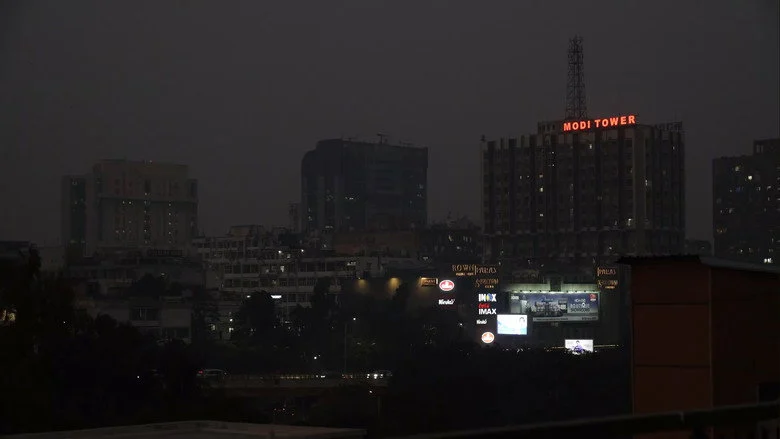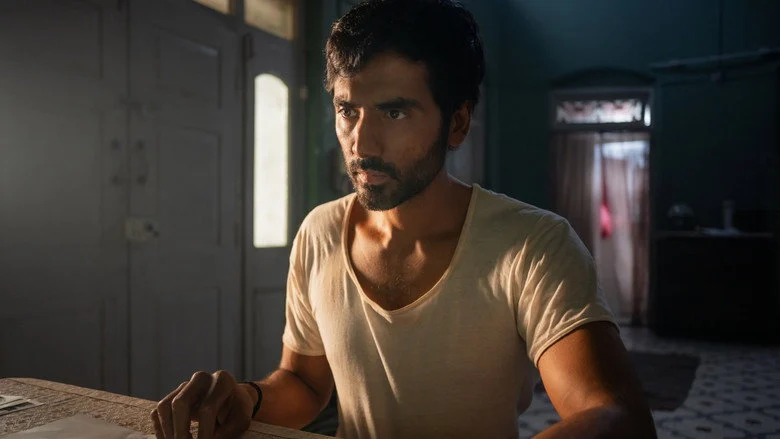


The faculty room goes quiet as Professor Gopal Nadkarni slides the rejected thesis across the table. Vicky, the research scholar, doesn’t pick it up, he just stares at his supervisor, and the silence before the first accusation carries more tension than anything the film will trust later.
That opening confrontation sets the terms for Abhijeet Mohan Warang’s Hindi drama: a private academic dispute that metastasizes into a televised ideological war, with history itself placed on the witness stand.
Dutt’s Gravitas Keeps the Rhetoric Afloat
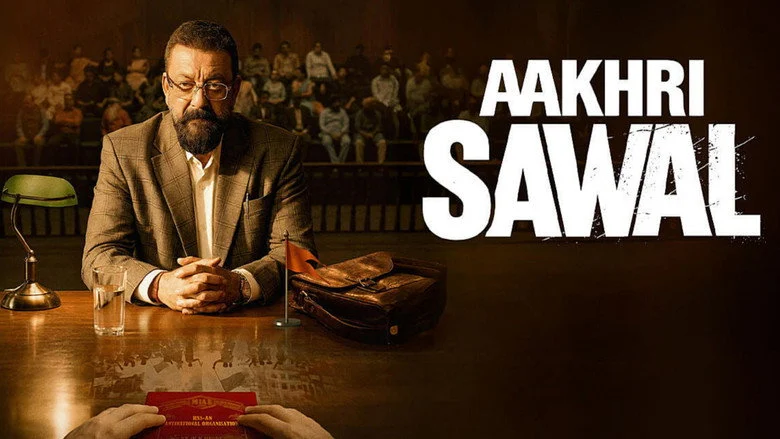
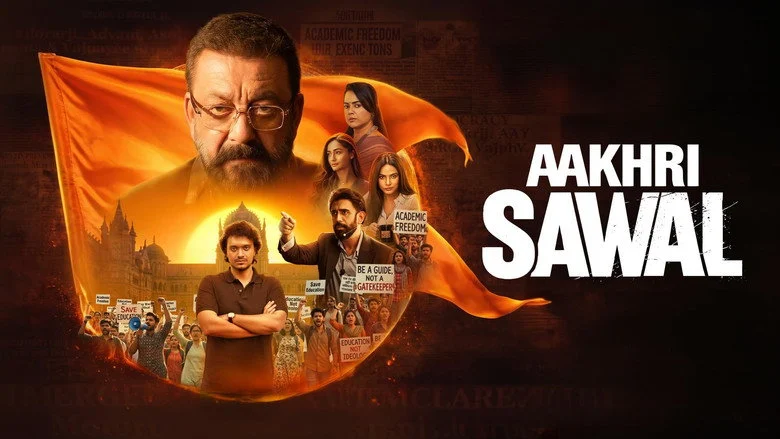
Sanjay Dutt is the engine here, and he knows it. In the courtroom-like televised debate, the film’s most praised sequence, he plays Nadkarni with coiled restraint, letting his voice drop to a near-whisper before each verbal strike.
His control in those confrontation scenes is the single reason the film remains watchable despite the screenplay’s excesses. Dutt gives the professor a weary authority, a man who believes he owns the room even when the cameras suggest otherwise.
I found myself wishing the script had trusted his stillness more; the moments where he simply listens are more magnetic than the speeches he’s given.
Direction and Screenplay: Forceful But Unsubtle
Warang’s direction gives the film a forceful, debate-driven structure that keeps focus squarely on confrontation. The linear screenplay by Utkarsh Naithani moves efficiently from thesis rejection to public controversy to media circus.
The weakness is restraint, or the lack of it. Critics have noted the film “does not know the meaning of subtlety, ” and the prolonged ideological speeches stretch credibility. The exposition-heavy stretches, where characters explain their positions at length, blunt the dramatic edge.
The Genre-Core Problem: Drama That Preaches Instead of Provoking
The film’s central conceit, a thesis rejection triggering a national ideological battle, is genuinely promising. The thriller element comes from public confrontation and reputational stakes, and the mystery lies in hidden motives and institutional bias. But the execution leans on argumentative scenes rather than personal stakes, which drains the drama of its human pulse.
The televised debate sequences, while energetic, grow repetitive. Each round follows the same pattern: Vicky challenges, Nadkarni parries, the anchor stirs. By the third exchange, the rhythm feels mechanical rather than suspenseful. The confrontation over flashpoints like the Gandhi assassination and the Emergency carries weight, but the film handles these historical references with the subtlety of a hammer.
What works is the escalation itself. The faculty dispute becoming a media spectacle mirrors real-world dynamics, and Warang stages those transitions with genuine momentum. The problem is that the film mistakes volume for depth, every argument is shouted, every point underlined, every ideological position painted in primary colors.
Supporting Cast: Namashi Carries the Challenge, Others Fade
Namashi Chakraborty’s Vicky is the film’s ideological battering ram, and he commits fully to the role of the scholar who treats the debate as a test of hidden truths.
His scenes opposite Dutt crackle with generational friction, the student’s righteous urgency against the professor’s institutional authority. Chakraborty holds his own in the verbal sparring, though the script gives him less room for vulnerability than the premise demands.
Amit Sadh, Sameera Reddy, and Mrinal Kulkarni are listed among the principal cast, but their arcs remain frustratingly thin in the material available. Their presence signals a broader institutional ecosystem, the media, the political machinery, the academic establishment, but they function more as functionaries than characters. The film’s refusal to develop them beyond their ideological functions is itself a commentary on how public debates flatten individuals into positions.
The Political Angle: A Whitewash Charge That Won’t Fade
The film’s handling of the RSS and historical flashpoints has drawn sharp criticism, with one review calling it an “RSS whitewash piece” that builds “narrative building without nuance.” The one-sidedness is the film’s most damaging flaw, it preaches to a choir rather than engaging with the complexity of history.
The box office reflects the divided response. Opening day collections of ₹0.48 crore (₹0.63 crore worldwide, per Republic World citing Sacnilk) and a reported lifetime India net of ₹2.94 crore with ₹3.54 crore worldwide by mid-May, figures tracked by Sacnilk and Bollywood Hungama, point to a film that struggled to find its audience. The verdict from trade is unambiguous: flop.
For those who want to see how other Hindi films have wrestled with ideological themes, our Hindi Thriller reviews cover the spectrum from sharp satire to heavy-handed messaging.
Audience Reception: The Debate Divides, Dutt Unites
Audience sentiment mirrors the critics. Praise centers on Dutt’s debate scenes and the film’s political relevance, while complaints focus on overt preaching and repetitive structure. The confrontational pacing in the middle sections earned some goodwill, but the extended speeches wore down even sympathetic viewers.
The film’s fate was sealed by its own ambition, it wanted to be a national conversation starter but settled for being a shouting match. “Sanjay Dutt’s bold ideological film falters in dramatic excess, ” one review concluded, and that assessment has aged well.
Aakhri Sawal is a film for Dutt completists and viewers who enjoy debate-heavy political dramas without demanding subtlety. If you can tolerate the exposition and the one-sided history, the confrontation sequences deliver a certain charge. Watch it for Dutt’s controlled intensity, but go in knowing the screenplay won’t meet him halfway. A modest 2.5 out of 5, a premise worth arguing about, buried under its own volume.
For a sharper take on ideological satire, Dug Dug review stretches a similar premise with more wit.
And for restraint in dialogue-heavy drama, I m verdict shows how stillness can anchor a screenplay.
Ankit Jaiswal is the Chief Author, covering Indian cinema and OTT releases with honest, no-filler criticism. An SEO strategist by background, he brings a research-driven approach to film writing, cutting through hype to tell you exactly what's worth your time.