

There is a moment early in Flashback where Siddharth, played by Prabhu Deva, stares at a photograph that rearranges itself into a memory he cannot place, and the film’s central promise lands with a thud of intrigue. It is a quiet, almost clinical image, but it tells you everything about the ambition here, a psychological puzzle that wants to keep you guessing even when its pieces don’t quite fit.
The result is a 120-minute thriller that holds your attention through sheer craft, even as its narrative logic begins to fray around the edges.
Prabhu Deva’s Restrained Turn Gives Flashback Its Pulse
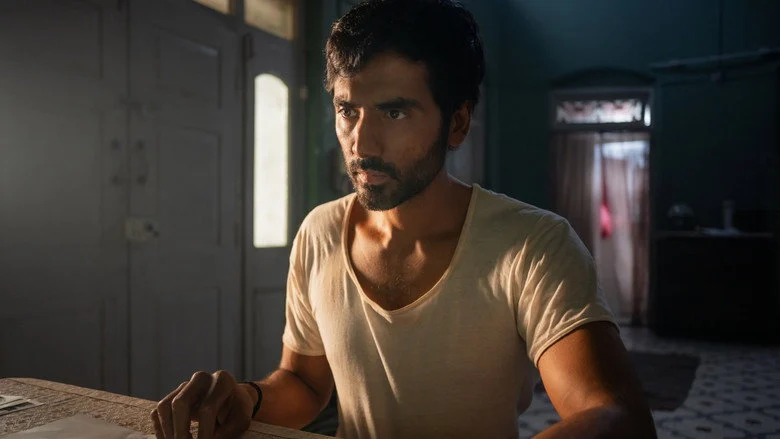
Prabhu Deva, known for his kinetic energy, plays Siddharth with a muted, almost withdrawn intensity. He lets the confusion of a man losing his grip on reality play out in small gestures, a hesitant pause before a door opens, a flicker of doubt when a face he should know passes by.
It is not a flashy performance, but it is an effective one. He anchors the film’s more surreal detours, ensuring that even when the plot stretches logic, his bewilderment keeps you grounded.

Anasuya Bharadwaj and Regena Cassandrra Bring the Film’s Emotional Weight
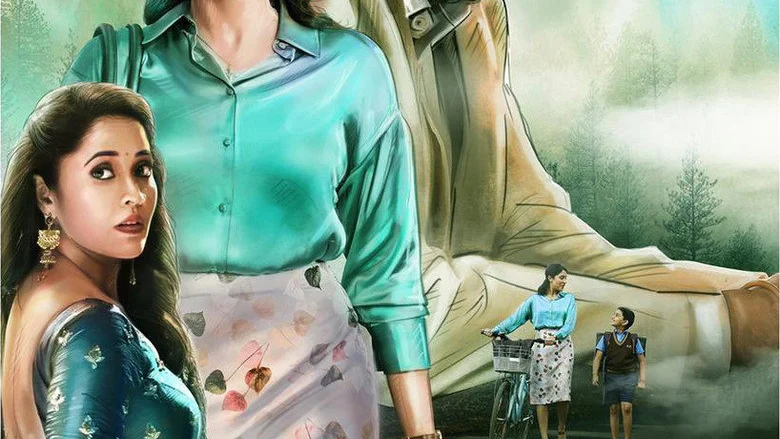
Anasuya Bharadwaj, as Nirmala, carries the film’s emotional core with a steely resolve. Her scenes opposite Prabhu Deva crackle with a tension that suggests a shared history the screenplay is reluctant to reveal, and she makes that ambiguity work in her favor.
Regena Cassandrra, playing Angel, is the film’s wild card. She injects a sense of unpredictability into every frame she occupies, and her presence signals the film’s intent to blur the lines between memory and reality. Chaams and Ilavarasu provide sturdy support, their brief appearances adding texture to a world that often feels deliberately disorienting.

The Screenplay’s Structure is a Double-Edged Sword
The non-linear structure is Flashback’s most ambitious choice, but it is also its most frustrating. The editing keeps the first half tight, cutting between timelines with a rhythm that generates genuine suspense. However, as the second half unfolds, the connective tissue between these timelines grows thin, and the film begins to repeat its tricks rather than deepen them.
The central mystery, what exactly happened to Siddharth, is teased with admirable restraint. Yet the payoff, when it arrives, feels rushed, as if the writers painted themselves into a corner and chose the quickest exit over the most satisfying one.
There is a specific scene in the final act where a crucial revelation is delivered through a single line of dialogue. It lands with a thud, not because the twist is bad, but because the buildup deserved more than a verbal explanation. The film tells you what happened instead of showing you, and that choice undercuts the visual storytelling that worked so well earlier.
Genre Execution: A Thriller That Relies on Atmosphere Over Action
Flashback is not an action thriller; it is a psychological one, and its best setpieces are its quietest. The cinematography uses shadows and reflections to create a world where nothing is quite what it seems, and the background score, though sparse, amplifies the unease without resorting to cheap jumpscares.
The film’s pacing is its biggest hurdle. The middle section drags, repeating the same visual cues of memory distortion until they lose their impact. A tighter edit, especially in the second half, would have elevated the material considerably.
What works best is the film’s commitment to its own logic. Even when the plot holes become visible, the craft never wavers. The director understands that a thriller lives or dies by its atmosphere, and Flashback has atmosphere in spades.
For those who enjoy a slow-burn mystery that rewards patience, this is a worthy addition to the genre. For those seeking a more conventional narrative, the puzzle may feel more like a chore than a challenge.
If you are drawn to films that play with memory and perception, you might also want to browse more Tamil film reviews.
Audience Reception and the Missing Context
The film currently holds an IMDb rating of 6.8/10 from 130 votes, a modest score that reflects its divisive nature. Some viewers have praised the performances and the atmosphere, while others have pointed to the convoluted plot as a major stumbling block.
There is no significant controversy surrounding the film, which is notable in itself. It is a straightforward genre exercise that has neither sparked political debate nor ignited social media discourse. The lack of noise, however, does not mean a lack of merit, it simply means Flashback is content to be a quiet puzzle rather than a loud statement.
I found myself more engaged by the film’s craft than its story, which is a strange position to be in. The performances and the direction are solid, but the screenplay’s inability to stick the landing leaves a lingering sense of what could have been.
If you are a fan of Prabhu Deva’s dramatic range or Anasuya Bharadwaj’s screen presence, this is worth a watch. The film’s best format is a quiet night with the lights off, where its shadows can do their work. It is not a must-watch, but it is a film that respects its audience’s intelligence, even when it overestimates their patience.
Flashback is a film that promises more than it delivers, but what it delivers is still compelling enough to justify a single viewing. I would give it a 2.5 out of 5, a well-crafted puzzle that never quite snaps into focus.
For a similar exploration of fractured memory, consider Curious Case review.
If you prefer a more restrained approach to emotional storytelling, Commandovin Love verdict might be more to your taste.
Ankit Jaiswal is the Chief Author, covering Indian cinema and OTT releases with honest, no-filler criticism. An SEO strategist by background, he brings a research-driven approach to film writing, cutting through hype to tell you exactly what's worth your time.