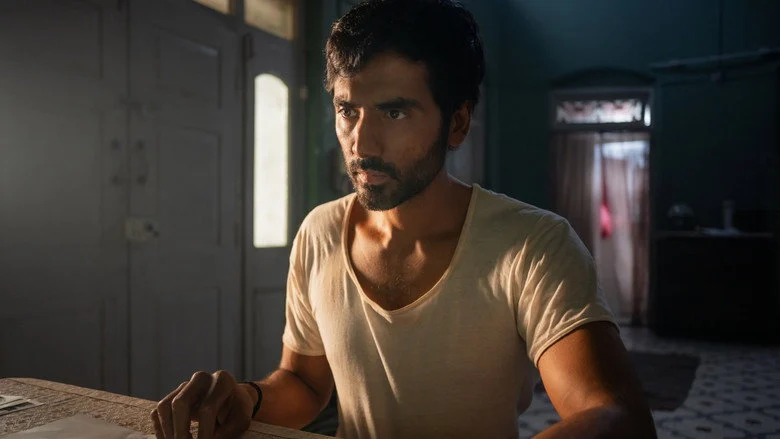


The night sequence arrives early. Arjun Acharya, freshly returned from London, dismisses the village warnings and settles into his inherited mansion. The candlelight flickers, the floorboards creak, and Akshay Kumar plays disbelief with comic bravado before the supernatural turns active. It is the one moment where the horror-comedy balance actually clicks.
Kumar’s strongest work here lives in reaction shots and rapid-fire exchanges rather than emotional peaks. His double role as Arjun and Madhav adds a structural curiosity, though the script keeps its weight on Arjun’s skeptical straight man.
Priyadarshan’s Ensemble Blocking Remains Readable, But the Script Repeats Itself
The director’s control over crowded frames keeps the haunted-house chaos legible. Wide compositions catch multiple reactions at once, and the decaying mansion becomes a usable comic playground.
The weakness is structural. The screenplay cycles through warning, dismissal, and chase beats several times without advancing the mystery. By the second half, the momentum drops into exposition and resolution stretches that feel longer than they should.
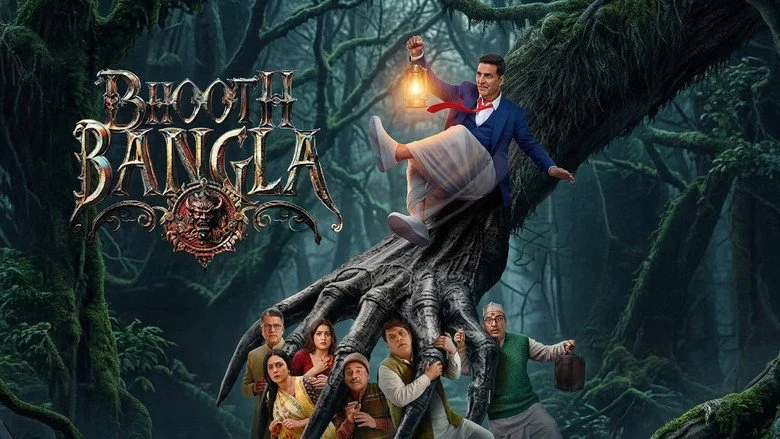
The Genre Core: Comedy First, Horror as Atmosphere
This is a comedy that borrows horror dressing. The haunted mansion works as a controlled single-location space where fear and confusion escalate through situational humor. The supernatural threat stays legible rather than graphic, matching a mass-market tone.
The wedding-planning chaos inside the bungalow shows how the film merges domestic comedy with ghost-story disruption. Balli’s nervous energy, Jagdish’s exasperation, and Arjun’s disbelief bounce off each other in familiar Priyadarshan rhythms.
The scares remain mild relative to the horror framing. Vadhusur functions as a mythic force built through legend and atmosphere, not screen time. The curse logic ties to brides and marriage, but the screenplay only partially explains the family property setup.
For more Hindi comedy-horror coverage, browse our Hindi Horror reviews.
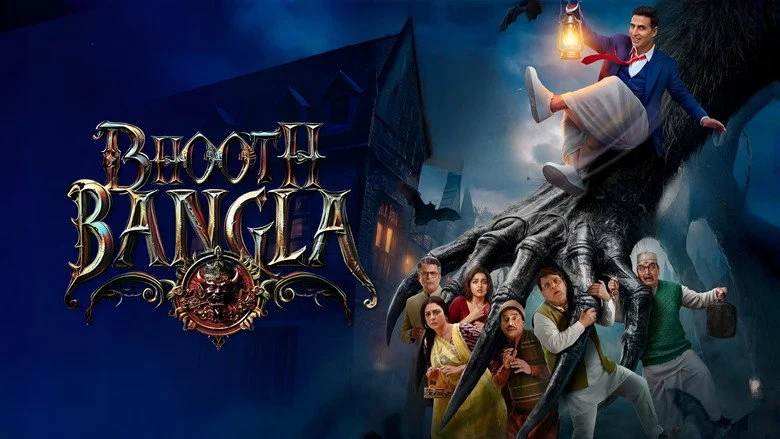
Paresh Rawal and Rajpal Yadav Anchor the Reaction Comedy
Rawal plays Jagdish Manikchand Roopkamal as the practical outsider who grounds the absurdity. His scenes are built around exasperated responses to the haunted setting, and he delivers the film’s most reliable comic relief.
Yadav’s Sunder “Balli” Bajwa brings physical-comedy beats and nervous energy. He functions as a disruption engine during the wedding-planning sequences, and his panic reads well against Kumar’s calm disbelief.
Mithila Palkar’s Meera stays tied to the family and marriage plot rather than the horror mechanics. Tabu’s supporting appearance adds seriousness to the myth layer, though her role remains brief.
Audience Reception and the Runtime Problem
The film opened with India net collections of ₹12.25 crore and a worldwide gross of ₹23.90 crore, per trade figures cited in YouTube review summaries. The opening suggests curiosity, but audience complaints center on the 2-hour-44-minute runtime feeling long for a comedy-horror.
Critics have averaged around 3 out of 5 across Times of India, Filmfare, and Mid-Day summaries. The production design earns praise for giving the mansion a decayed, usable setting, while the uneven tonal shifts between spooky and broad comedy draw criticism.
The IMDb score sits at 6.7, reflecting appreciation for Kumar’s physical timing and the Rawal-Yadav pairing, alongside frustration with predictability after the first hauntings. I found the first half tighter and funnier than the second, which drags through repeated information.
For those who enjoy ensemble comedy with supernatural stakes, the film delivers a familiar but workable experience. Watch it for the cast chemistry and the mansion’s atmosphere, but adjust expectations for originality. The best format is a big screen where the production design can breathe.
If you appreciated Priyadarshan’s ensemble control here, 8th Street review offers a different kind of character study worth examining.
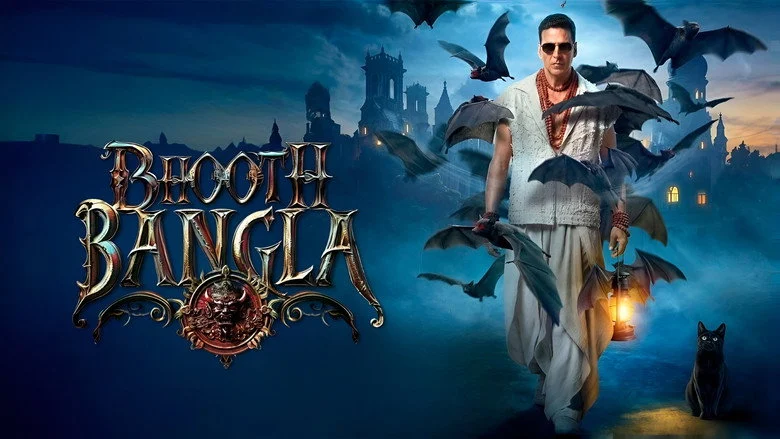
Bhooth Bangla earns a modest 3 out of 5 for its confident staging and dependable cast, but the screenplay’s repetition keeps it from rising above Priyadarshan’s earlier work.
For a sharper take on flawed mainstream entertainers, Derby verdict shows how high energy can stumble at the finish line too.
Ankit Jaiswal is the Chief Author, covering Indian cinema and OTT releases with honest, no-filler criticism. An SEO strategist by background, he brings a research-driven approach to film writing, cutting through hype to tell you exactly what's worth your time.