

A man built on deception inches across a colonial-era landscape, each lie layering deeper than the last until the ground beneath him vanishes entirely. Pallichattambi is a period thriller that trusts its audience to follow a schemer’s unraveling without apology, set against the dusty realities of migrant farming communities under British rule.
Director Dijo Jose Antony constructs a world where survival and scheming become indistinguishable, and that moral ambiguity is precisely what makes this Malayalam drama worth a deliberate watch for viewers willing to sit with discomfort.
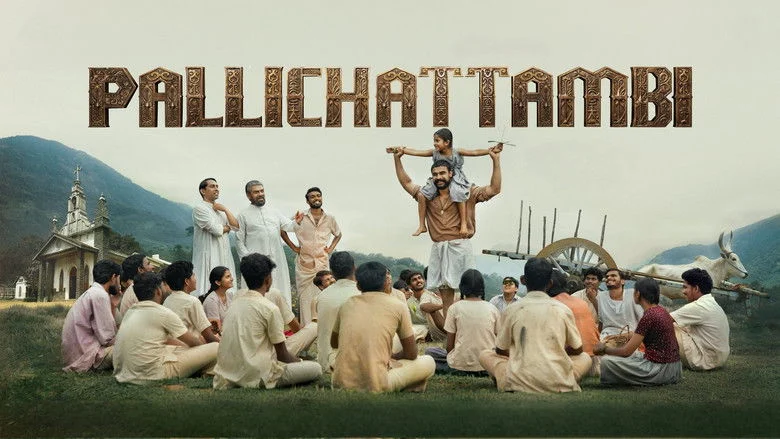
Tovino Thomas Commits to Chattambi’s Unglamorous Desperation
Tovino carries the entire weight of Pallichattambi as Chattambi, a man whose risky plans keep him perpetually one step ahead of his neighbors until they catastrophically don’t. His performance resists the temptation to make the character sympathetic; instead, he inhabits a man whose survival instinct has corroded into pure self-preservation.
This is not a role designed for likability. Thomas understands that, and leans into the character’s moral compromises without flinching.
Antony’s Period Detail Over Grandeur Serves the Story
Dijo Jose Antony prioritizes the texture of small-town colonial life over sweeping historical framing. The screenplay by S Suresh Babu sketches a landscape where British rule functions as distant pressure rather than dramatic machinery, a choice that keeps focus on personal corruption rather than imperial grievance.
The weakness lies in pacing; at 139 minutes, the film sometimes settles into rhythm when momentum would serve better. Yet this deliberation also prevents the narrative from becoming a simple morality play.
Period Thriller Framework Builds Through Accumulated Pressure
The film’s dual identity as both period drama and thriller creates tension through implication rather than spectacle. Chattambi’s schemes escalate in consequence even as they narrow in scope, each plan trapping him further within a web of his own making. The migrant farming backdrop grounds these schemes in material desperation, not abstract villainy.
Tijo Tomy’s cinematography works in the film’s favor by refusing visual romanticism. The landscape feels lived-in, worn, specific to region and era without announcing itself. This restraint mirrors the screenplay’s unwillingness to explain or judge its protagonist.
Where the thriller mechanics might stumble is in surprise; the genre typically demands reversals or plot turns that this narrative seems determined to deny. Antony appears more invested in watching a man dig himself deeper than in providing the sudden revelations audiences often expect. That choice will alienate viewers expecting traditional genre payoff.
Ensemble Cast Anchors the World Around Thomas’s Chaos
Vijayaraghavan, Sudheer Karamana, and Prithviraj Sukumaran populate the margins as townspeople whose interests clash with and around Chattambi. Their presence establishes that this is not a one-man drama but a small ecosystem where the schemer must navigate competing survival needs.
Kayadu Lohar and supporting players build the fabric of community and consequence without overshadowing the lead’s deterioration. Every casting choice signals a film more interested in ensemble texture than star machinery.
Colonial Context Operates as Pressure, Not Backdrop
The British colonial setting could have functioned as mere period dressing, but instead it creates conditions where survival schemes become logical rather than pathological. For migrant farming communities under foreign rule, the stakes are material and immediate. Chattambi’s dishonesty exists within a world already structured by exploitation and powerlessness.
This framing prevents easy moral judgment. The film’s refusal to condemn its protagonist outright, to provide the audience with comfortable distance, may frustrate viewers seeking clearer ethical boundaries.
Pallichattambi works best for cinephiles comfortable with ambiguous protagonists and period narratives that prioritize accumulated pressure over dramatic incident. The film’s Malayalam language and regional specificity add authenticity but may limit its crossover appeal. Tovino’s commitment to the role’s moral complexity is genuine, and Antony’s visual restraint lets the story breathe without manipulation. Watch this in a theater where the quieter moments between schemes can register fully, streaming may diminish its careful pacing.
Malayalam period dramas have produced more immediately accessible films, but few as willing to sit with a protagonist’s ethical deterioration without offering redemption as a safety net. If you value character over plot mechanics and patience over payoff, Pallichattambi demands your attention.
Explore more Malayalam Thriller reviews for similar character-driven narratives in regional cinema.
Tovino Thomas’s morally compromised turn here echoes the layered performance work seen in Toaster review.
Period narratives about survival under external pressure share thematic DNA with Inkosari Chapter verdict.
Ankit Jaiswal is the Chief Author, covering Indian cinema and OTT releases with honest, no-filler criticism. An SEO strategist by background, he brings a research-driven approach to film writing, cutting through hype to tell you exactly what's worth your time.