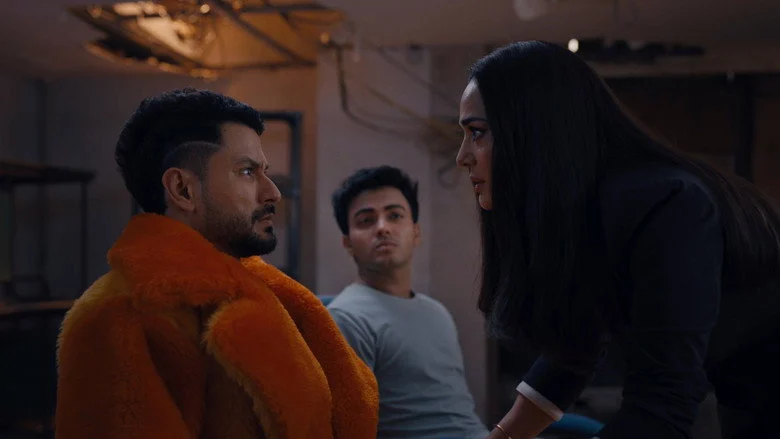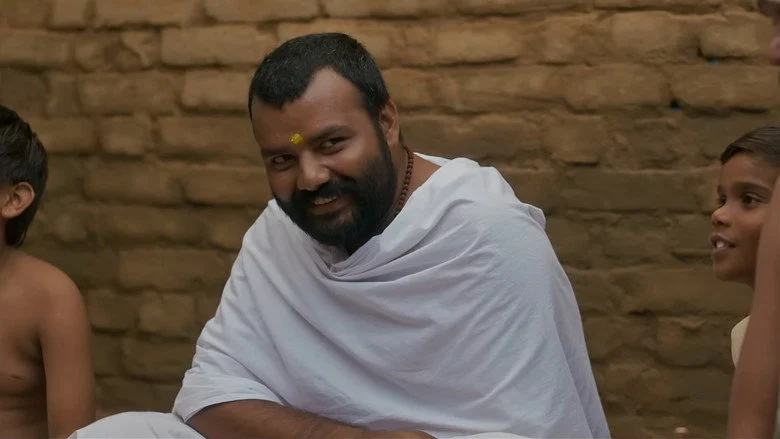


Sethu, a government health worker in Wayanad, performs an act of quiet desperation, impersonating his dead relative Markose to keep his paralysed brother Madhu from collapsing into grief. The performance works until a stranger crosses the threshold, and suddenly the fragile illusion shatters, pulling Sethu into a maze of secrets he never wanted to enter. What begins as a delicate character study derails into something far stranger and infinitely less coherent.
Ratheesh Balakrishnan Poduval has built a reputation for quirky storytelling, but Oru Durooha Saahacharyathil tests whether eccentricity without structure can sustain a feature film. The answer, unfortunately, is no.
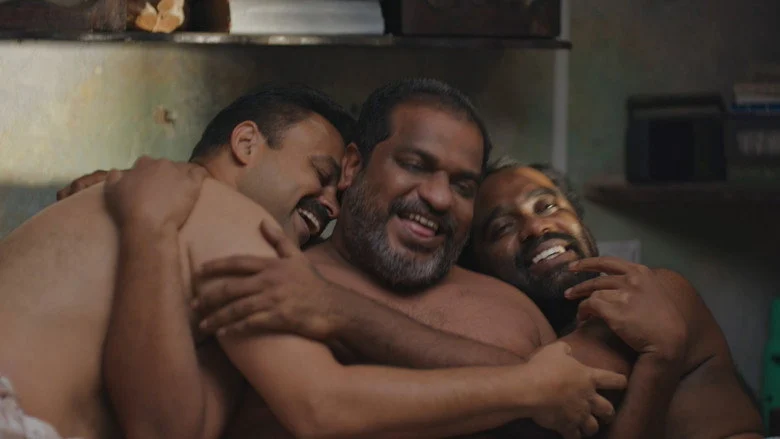
Kunchacko Boban carries the weight alone
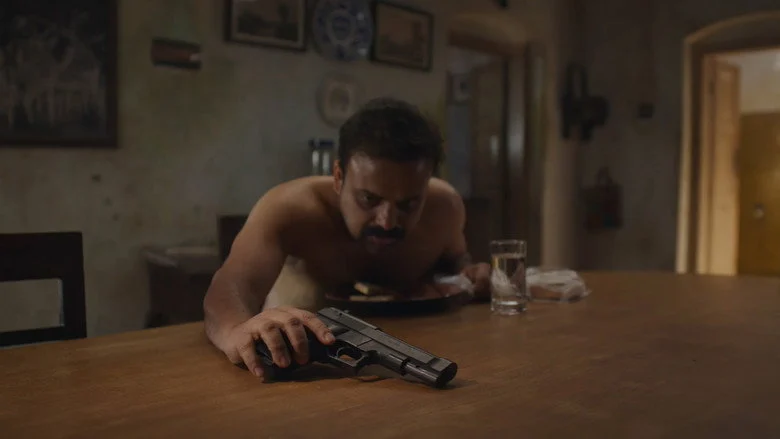
Boban excels as Sethu, the timid health worker whose moral compromise and emotional fracture feel genuinely earned in the early reels. His face registers a man caught between duty and deception, between protecting his brother and protecting himself. The quiet desperation of his performance anchors the film’s best moments, but even his skill cannot prevent the script from abandoning him as things spiral downward.
Poduval’s direction conflates oddness with depth
The director constructs scenes with a deliberate strangeness, characters speak in non-sequiturs, motivations shift without warning, social observation bleeds into absurdism. Yet this style, which worked in Nna Thaan Case Kodu, becomes a liability here. The filmmaker reaches for quirk and social commentary about truth and illusion but disappointingly delivers a descent into madness that feels unstructured rather than intentional.
The drama-thriller hybrid fractures under its own weight
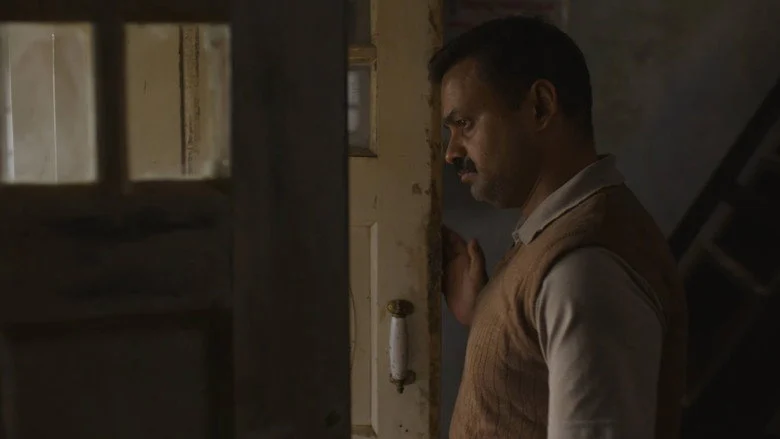
The film’s opening act establishes genuine tension, a stranger enters the home, suspicion rises, and the audience senses something unspoken lurking beneath surfaces. The relationship between Sethu and Madhu carries both warmth and strain, suggesting the film understands domestic claustrophobia. Yet the thriller machinery never coalesces into a coherent payoff.
Where the genre demands escalation and revelation, the screenplay opts for bewilderment. The central conflict, truth shattering illusions, is thematically sound, but the execution lurches between grotesquerie and sentimentality without finding middle ground. The construction is so bizarre that viewers expecting a normal narrative trajectory will abandon the film before its conclusion.
Social observation about how people sustain themselves through small lies could have deepened the character work, but instead it dissolves into mood and texture. The film mistakes atmosphere for meaning, assuming that strangeness alone generates insight.
For those willing to venture into Malayalam drama-thrillers, the genre offers richer rewards elsewhere. If Poduval’s earlier work appeals to you, proceed cautiously here.
Dileesh Pothan and Chidambaram anchor the supporting cast
Dileesh Pothan stands out as Madhu, the paralysed brother whose refusal to accept death becomes the emotional core of the film. His performance conveys both vulnerability and stubbornness, refusing easy sympathy. Chidambaram, in a supporting role, also impresses, suggesting the ensemble could have sustained a tighter screenplay with better structural guidance.
A film that mistakes oddness for innovation
The Week rated the film 2.5 out of 5 stars, and that assessment feels generous given how thoroughly the narrative collapses. The positive elements, Boban’s understated intensity, the warmth between brothers, thematic reach toward truth and deception, cannot overcome a screenplay that gets so lost in its own ideas that it forgets to move forward. This is a film made for people who find narrative confusion fascinating rather than frustrating.
Skip this unless you are deeply invested in Poduval’s sensibility or willing to tolerate two hours of structural bewilderment. Malayalam cinema has delivered far stronger dramatic thrillers with stranger characters and clearer purpose.
For more analysis of Malayalam cinema’s experimental turns, browse our Malayalam Thriller reviews to discover films that balance oddness with narrative coherence.
Oru Durooha Saahacharyathil reaches for something interesting but settles for incomprehensible, a 2.5-star cautionary tale about ambition without discipline in Malayalam storytelling.
Ratheesh Balakrishnan Poduval’s gift for quirky characterization also surfaces in Worst He review, another study of eccentric behavior under pressure.
Both films wrestle with how truth destabilizes intimate relationships in Aadharam verdict, though with markedly different structural success.
Ankit Jaiswal is the Chief Author, covering Indian cinema and OTT releases with honest, no-filler criticism. An SEO strategist by background, he brings a research-driven approach to film writing, cutting through hype to tell you exactly what's worth your time.