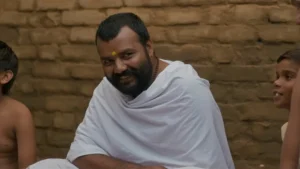

Raja Shivaji (2026) lands as an ambitious historical action-drama with a clear goal: deliver scale while telling the rise of Chhatrapati Shivaji Maharaj. With a reported ₹100 crore budget and a strong Maharashtra opening, the film aims big and mostly delivers on spectacle.
Rated 3/5, Raja Shivaji works best when it leans into conflict and character moments. It struggles when it turns into a history lecture, but there’s enough here for viewers interested in grand, patriotic storytelling.

Plot Overview
The story tracks Shivaji Bhosale’s early political awakening and his push toward Hindavi Swarajya. It balances personal influences from Jijabai and Shahaji with growing tensions against the Bijapur Sultanate.
The narrative builds toward the Afzal Khan confrontation, which becomes the emotional and dramatic peak. Along the way, the film covers fort strategies, early campaigns, and shifting alliances, though not always smoothly.
Performances
Riteish Deshmukh delivers a committed performance as Shivaji. His physical transformation and controlled dialogue delivery show effort, especially in action sequences and quieter family scenes.
However, the role demands natural authority, and that’s where the performance occasionally feels constructed rather than instinctive. It improves in the second half as the character gains momentum.
Sanjay Dutt as Afzal Khan is a clear standout. His presence adds weight to the conflict, and he plays the antagonist with confidence and restraint. Even when the script limits depth, he remains effective.
Among supporting actors, Sachin Khedekar brings stability as Shahaji, while Bhagyashree adds emotional grounding as Jijabai. Genelia Deshmukh and Vidya Balan are underused but impactful in brief moments.
Technical Aspects
Visually, Raja Shivaji impresses with its scale. Forts, battlefields, and court settings are detailed and immersive, giving the film a strong historical texture.
The cinematography captures wide landscapes well, especially in outdoor sequences. However, inconsistencies appear in VFX-heavy scenes where CGI quality dips, breaking immersion.
The background score supports the film effectively, especially during war sequences and emotional peaks. It enhances tension without overwhelming most scenes, though it occasionally feels repetitive.
Editing is one of the weaker areas. The first half feels stretched due to heavy exposition, while the second half is tighter and more engaging. The pacing imbalance is noticeable.
Strengths
The biggest strength of Raja Shivaji is its ambition. It aims to present a large-scale historical story and succeeds in delivering visual grandeur and impactful battle sequences.
The Afzal Khan arc is another highlight. It gives the film focus and builds toward a strong payoff. The production design and costumes also add credibility and depth to the setting.
The film also connects strongly with regional audiences, especially in Maharashtra, where its cultural resonance works in its favor.
Weaknesses
The script often leans too heavily on dialogue instead of visual storytelling. Long exposition scenes slow down the narrative and dilute tension.
Character development outside the central arc feels limited. Several supporting roles appear briefly without meaningful depth.
VFX inconsistency is another issue. While some sequences look polished, others feel rushed and underdeveloped.
The film also simplifies complex political dynamics, making the story feel more straightforward than it could have been.
Box Office & Audience Response
Raja Shivaji opened strongly with an estimated ₹13, 14 crore net on Day 1, marking a record opening for a Marathi-language film. Advance bookings were particularly strong in Maharashtra.
However, early audience ratings have been mixed, with some viewers praising the scale and performances while others criticize pacing and length.
The film’s success will depend on sustained performance beyond its core regional market, especially given its high production budget.
Is Raja Shivaji worth watching?
If you enjoy historical dramas with large-scale battles and strong patriotic themes, Raja Shivaji is worth a watch. It delivers enough spectacle and a solid central conflict to stay engaging.
However, if you prefer tightly written narratives with consistent pacing, this film may feel uneven, especially in the first half.
Final Verdict
Raja Shivaji delivers on ambition and visual scale but struggles with pacing and narrative balance. It shines in key moments, particularly the Afzal Khan storyline, but loses grip in slower, dialogue-heavy stretches.
It’s not a flawless historical epic, but it offers enough to satisfy viewers looking for a grand retelling of Shivaji’s rise.
Rating: 3/5